
Most people learn about money the wrong way.
They pick up habits from watching their parents, absorb advice from friends who are just as confused, and spend decades making the same quiet mistakes — spending a little too much, saving a little too late, and wondering why financial security always feels just out of reach.
The good news is that a single book can undo years of bad thinking. Not by handing you a get-rich-quick formula, but by shifting something deeper — the way you actually see money, what it means, and what it can do.
These ten books won’t all agree with each other. Some are practical. Some are philosophical. A few will make you feel a little uncomfortable. But all of them will leave you thinking about money differently than you did before.
Books That Change Your Mindset First
The Psychology of Money — Morgan Housel
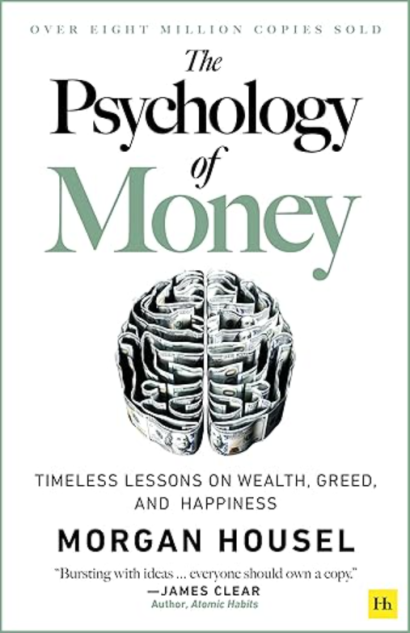
Nobody makes financial decisions on a spreadsheet.
They make them at the kitchen table after a stressful week. They make them watching a neighbour pull up in a new car. They make them the morning after losing a job, or the afternoon after getting an unexpected bonus. Money decisions are always emotional, and The Psychology of Money is the first book that really takes that seriously.
Morgan Housel’s book is structured as 19 short essays, each one exploring a different way that human behaviour shapes financial outcomes. He writes about luck and risk, about how wealth is often invisible, about the way our personal histories create completely different ideas of what money is and what it’s for. One of the most memorable ideas in the book is that financial success is less about intelligence and more about behaviour — specifically, the ability to stay patient and consistent when everyone around you is panicking.
The book doesn’t tell you what stocks to buy or how to structure your budget. It tells you why you sabotage yourself, and what to do about that instead. For most readers, that turns out to be far more useful.
Get Book: The Psychology of Money!Rich Dad Poor Dad — Robert Kiyosaki
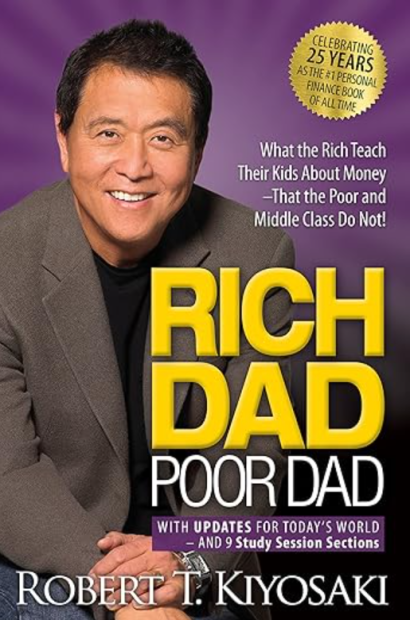
Few personal finance books have sparked as much argument as this one — and few have changed as many minds.
Robert Kiyosaki grew up watching two very different approaches to money. His biological father, whom he calls his Poor Dad, was educated and hardworking but spent his entire life as an employee, always feeling one step behind financially. His best friend’s father, the Rich Dad of the title, had little formal schooling but understood money in a way that let him build lasting wealth. Kiyosaki’s book is built around comparing what each man taught him.
The central idea is simple but quietly radical: the wealthy don’t work for money. They make money work for them. Kiyosaki argues that most people are trapped because they spend their lives trading time for a salary, never building assets that generate income on their own. He draws a sharp distinction between assets — things that put money in your pocket — and liabilities — things that take it out. Your home, he controversially argues, is almost always a liability.
Some of what Kiyosaki writes has been disputed, and his investment advice can be vague. But the mindset shift the book offers — from employee thinking to owner thinking — is genuinely powerful. It tends to be the book that opens the door to everything else.
Get Book: Rich Dad Poor Dad!Think and Grow Rich — Napoleon Hill
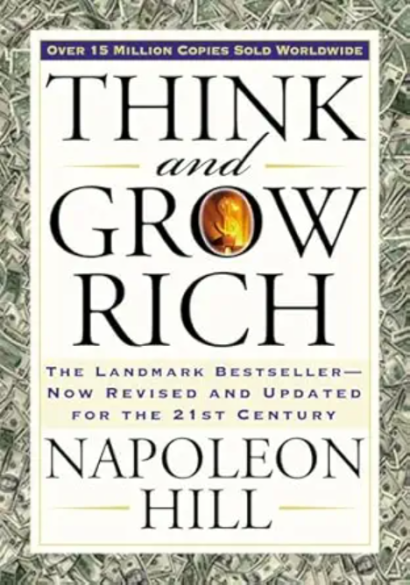
Originally published in 1937, this book has sold over 100 million copies, which tells you something about how well its ideas have held up.
Napoleon Hill spent years interviewing the most successful people of his era — including Andrew Carnegie, Henry Ford, and Thomas Edison — trying to understand what they had in common. What he found wasn’t just ambition or talent. It was a very specific way of thinking: a focused, almost obsessive clarity about what they wanted, combined with an unwillingness to accept failure as permanent.
The book is less about money mechanics and more about how your mind either creates or limits your financial life. Hill argues that before any external wealth is built, something has to shift internally — in how you see yourself, what you believe is possible, and how clearly you can hold a goal in your mind. He introduces concepts like the Master Mind group (surrounding yourself with people who lift your thinking) and the power of a burning desire (wanting something with enough intensity that it drives action every day).
Some of the language is dated, and the book leans more motivational than practical. But its core argument — that your beliefs about money shape your outcomes just as much as your actions do — is as true now as it was in 1937.
Get Book: Think and Grow Rich!Books That Give You a System
I Will Teach You to Be Rich — Ramit Sethi
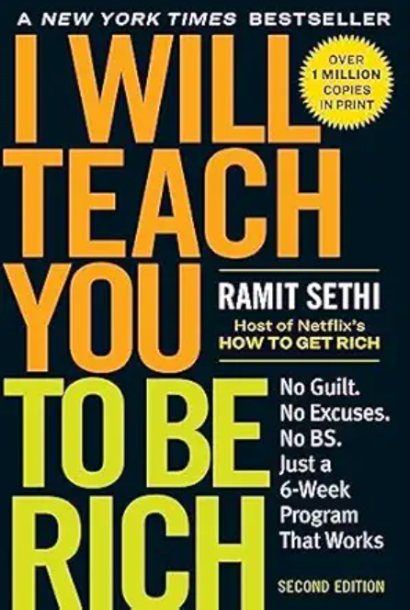
The title sounds like a scam. The book is anything but.
Ramit Sethi wrote this for people in their 20s and 30s who know they should be doing something smarter with their money but have no idea where to start. His approach is unapologetically modern, practical, and free of the guilt-based frugality that makes most financial advice exhausting. He isn’t interested in whether you buy coffee. He’s interested in whether your money is actually working for you while you sleep.
The cornerstone of the book is automation. Sethi walks readers through building a system where money flows automatically into the right places — retirement accounts, savings goals, investments — before it ever reaches your spending account. Once the system is running, you barely have to think about it. He also tackles the big things that most finance books ignore: how to negotiate your salary, how to choose the right credit cards, and how to think about large purchases without obsessing over every small one.
The book is structured as a six-week plan, which means it’s designed to actually be implemented, not just read and admired. If you want one book that moves from idea to action faster than any other on this list, this is it.
Get Book: I Will Teach You to Be Rich!The Total Money Makeover — Dave Ramsey
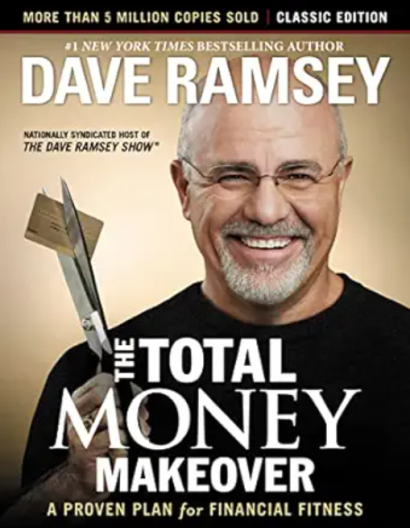
Dave Ramsey has one argument, and he makes it loudly and without apology: debt is the enemy of financial peace, and getting rid of it should be your only priority until it’s gone.
His book lays out what he calls the Baby Steps — a seven-step process that starts with building a small emergency fund, moves through aggressively paying off every debt, and eventually reaches investing and wealth building. The method is deliberately sequential. You don’t move to the next step until the current one is done. That structure, which some critics find too rigid, is precisely what makes it work for people who have tried more flexible approaches and failed.
The psychological insight behind the method is the debt snowball — paying off your smallest debts first, regardless of interest rate, to build momentum and motivation. Financially speaking, it’s not always optimal. Emotionally speaking, it’s extremely effective. People who feel overwhelmed by debt often need a win before they can sustain the effort of a long climb, and Ramsey understands that.
This is not the most sophisticated book on the list. But it has helped more people escape debt than almost any other, and that counts for a great deal.
Get Book: The Total Money Makeover!Your Money or Your Life — Vicki Robin
This is the book that asks the question nobody else does: is what you’re doing with your money actually making you happy?
Vicki Robin’s approach begins with a concept she calls life energy. The idea is this — when you spend money, you’re not just spending dollars. You’re spending hours of your life that you traded for those dollars. Once you start thinking about every purchase in terms of hours worked rather than cash spent, your relationship with money changes at a level that no budget or spreadsheet can reach.
The book offers a nine-step programme for transforming how you earn, spend, and save. It’s deeply rooted in the FIRE (Financial Independence, Retire Early) movement, and many of the people who discovered financial independence in their 30s and 40s credit this book as the starting point. But it works equally well for someone who simply wants to spend more consciously and feel less like money controls their life rather than the other way around.
It’s part personal finance, part philosophy, and part gentle interrogation of what you actually want your life to look like. Few books on this list go that deep.
Get Book: Your Money or Your Life!Books That Teach You to Invest
The Simple Path to Wealth — JL Collins
JL Collins started writing about money in letters to his daughter — a young woman who knew money was important but wasn’t ready to hear about it yet. Those letters became a blog, and that blog became this book, which is now one of the most recommended investing guides in the FIRE community.
Collins’ argument is refreshingly simple: you don’t need to be clever to build wealth through investing. You need to be consistent and cheap. His advice centres almost entirely on low-cost index funds — specifically, broad market index funds that capture the performance of the entire stock market rather than trying to beat it. He explains, convincingly, why most professional fund managers fail to outperform a simple index fund over time, and why the fees they charge make the gap even wider.
The book covers everything from how the stock market actually works, to what to do when it crashes (the answer is almost always: nothing), to how to structure investments for financial independence. It’s clear, calm, and very readable. For anyone who has always found investing confusing or intimidating, this is the best place to start.
Get Book: The Simple Path to Wealth!The Millionaire Next Door — Thomas Stanley & William Danko
Everything you think you know about millionaires is probably wrong.
That’s essentially what Thomas Stanley and William Danko found when they spent years studying wealthy Americans. Their research revealed that most people with significant wealth don’t live in the largest houses or drive the newest cars. They live below their means, in ordinary neighbourhoods, driving used cars, and quietly building net worth while their higher-earning but higher-spending neighbours fall further behind.
The book dismantles the idea that wealth looks like luxury. Most real wealth is invisible, built slowly through the unglamorous combination of earning reasonably, spending deliberately, and investing consistently over decades. Stanley and Danko also found that a surprisingly large proportion of high earners — doctors, lawyers, people with impressive salaries — are actually poor in terms of net worth, because their spending keeps pace with or exceeds their income.
This book changes how you see the people around you, and more importantly, how you see yourself. It makes frugality look like what it actually is — a long game that almost always wins.
Get Book: The Millionaire Next Door!Books That Expand What “Rich” Even Means
Die with Zero — Bill Perkins
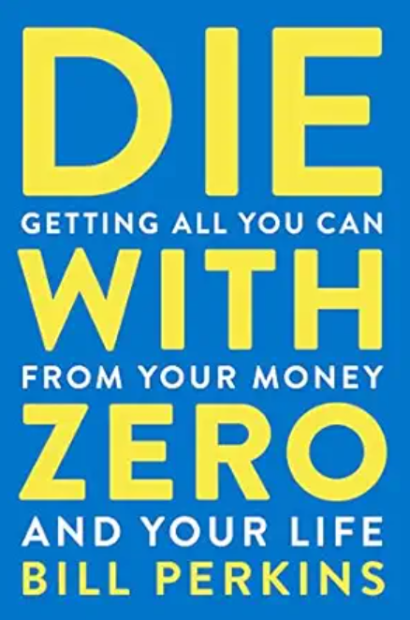
Every other book on this list tells you to save more. This one tells you to think harder about when to spend.
Bill Perkins is not against wealth — he’s against the pointless accumulation of money that never gets used. His central argument is that most people spend the most energetic and healthy decades of their lives deferring experiences in order to save for a future that may never arrive in the form they imagined. People save and save, and then find themselves in their 70s with more money than they can spend and knees that won’t let them do the things they always said they’d do someday.
Die with Zero is a book about timing — specifically, the idea that a dollar spent at 35 buys a different and often richer experience than the same dollar spent at 75. Perkins introduces the concept of memory dividends: the idea that experiences you invest in now pay returns in memories and meaning for the rest of your life. He argues for spending more intentionally during peak health and energy, giving generously while you’re alive to see the impact, and being much more deliberate about what you’re actually saving for.
It will unsettle you if you’re a disciplined saver. It’s supposed to.
Get Book: Die with Zero!The Richest Man in Babylon — George S. Clason
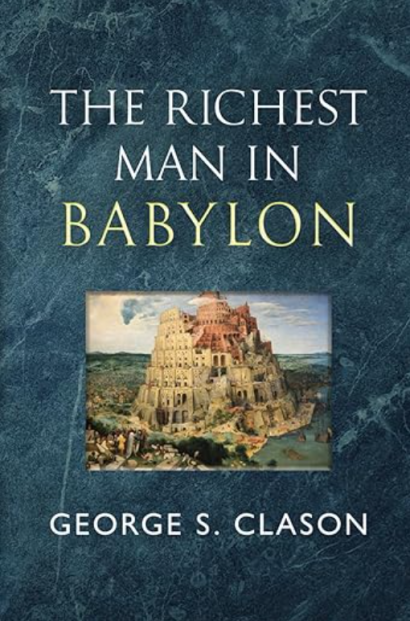
Written in 1926, this short book has been in print for a hundred years. That alone should tell you something.
George Clason set his financial lessons in ancient Babylon, telling them through parables — stories of merchants, slaves, and traders navigating the timeless problems of debt, poverty, and the desire for more. The format sounds unusual for a finance book, but it works. The lessons feel less like instructions and more like wisdom, which makes them easier to absorb and harder to forget.
The core principles are old and simple: pay yourself first (save at least a tenth of everything you earn before spending a single coin), live within your means, make your money work through careful investment, protect your savings from loss, and increase your ability to earn. None of it is revolutionary. But Clason understood that the gap between knowing good financial principles and actually living by them is where most people lose the game — and his fables are designed to close that gap.
If you could only read one book on this list in a single afternoon and carry something lasting away from it, this would be the one.
Get Book: The Richest Man in Babylon!A Final Word
You don’t need to read all ten to start changing things.
Pick the one that speaks to where you actually are right now — overwhelmed by debt, confused about investing, wondering if you’re building a life that means something, or just tired of feeling like money always seems to slip through your fingers. Start there.
The common thread running through every book on this list isn’t a specific strategy or a secret. It’s the quiet, consistent shift in how you think. Change that, and the rest tends to follow.
