
Can fiction change the way we see the future? Science fiction has often served as a looking glass for our hopes and fears. It imagines machines that think, governments that watch, walls that broadcast and medicines that calm. Decades before smartphones and social media, writers were dreaming up worlds where people rarely read, where birth happens in labs and where entire cities exist online. These visions are not just wild guesses; they are grounded in careful observation of science, politics and human nature.
Think about artificial intelligence and how it has become part of daily life. Long before digital assistants, authors wrote about computers that could learn and even control humans. Consider surveillance: modern cities are filled with cameras and sensors collecting data. In 1949, a novel warned about a society where every thought was watched. Social media connects billions of people but also spreads misinformation at lightning speed. Classic tales described giant walls that talk to you and distract you from reality, hinting at our constant scrolling. Climate change and reproductive rights are also areas where fiction has been eerily prescient. Authors imagined barren worlds where fertility plummeted, prompting leaders to seize control of women’s bodies. Today, these issues dominate headlines.
The list that follows highlights six science fiction books that predicted the future in surprisingly accurate ways. These classic science fiction novels span nearly a century, ranging from early dystopian visions to cyberpunk adventures. Each is a testament to how creative minds can foresee trends and warn us about paths we might follow. For readers seeking sci‑fi novels about the future, this listicle shows why the genre remains more than entertainment. It reflects the best science fiction books that dared to imagine tomorrow and, in doing so, influenced technology, culture and public discourse.
1. Nineteen Eighty‑Four (1949) – George Orwell
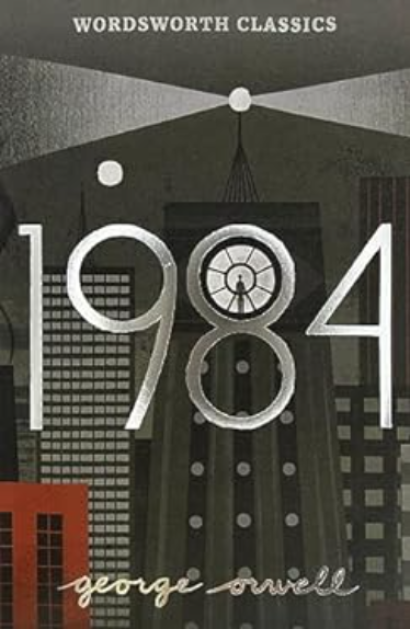
George Orwell’s Nineteen Eighty‑Four is perhaps the most cited dystopian science fiction novel. Set in the totalitarian state of Oceania, it follows Winston Smith, a minor bureaucrat working for the Ministry of Truth. Winston edits historical records to align with party narratives while secretly longing for freedom and truth. His quiet rebellion pits him against Big Brother, the Party’s omnipresent leader.
What It Predicted
Orwell imagined a society controlled through constant surveillance, propaganda and language manipulation. The novel introduced the term “Big Brother” for an intrusive state. According to a scholarly analysis from the University of California, the character Big Brother has become “practically synonymous with the invasion of privacy,” and the Party slogan “Big Brother is watching you” is now used to describe overbearing surveillance. This prediction resonates today as governments and corporations collect vast amounts of personal data. Cameras record public spaces, algorithms track online activity and facial‑recognition systems identify individuals. Orwell also foresaw the manipulation of language. Newspeak reduces vocabulary to restrict thought, while the concept of “doublethink” allows citizens to accept contradictory beliefs. Modern debates about “alternative facts” and misinformation show that controlling language and truth remains a powerful tool.
Relevance Now
Modern society lives in a web of monitoring. Smart devices log our movements and communications. Data brokers build profiles that can be used for targeted advertising or political influence. The classic science fiction novels of the 20th century warned that convenience and security could cost us privacy. Orwell’s portrayal of history being rewritten to fit political agendas mirrors current concerns about misinformation campaigns. The book’s themes of censorship and the suppression of dissent continue to inform discussions about free speech and digital rights.
Why It Still Matters
Nineteen Eighty‑Four endures because it offers a cautionary tale about power, surveillance and the fragility of truth. Its imagery informs activism, policy and art, reminding readers to scrutinise authority and defend civil liberties. As new technologies emerge, Orwell’s insights encourage us to balance innovation with safeguards that protect privacy and freedom.
Get Book: Nineteen Eighty‑Four2. Brave New World (1932) – Aldous Huxley
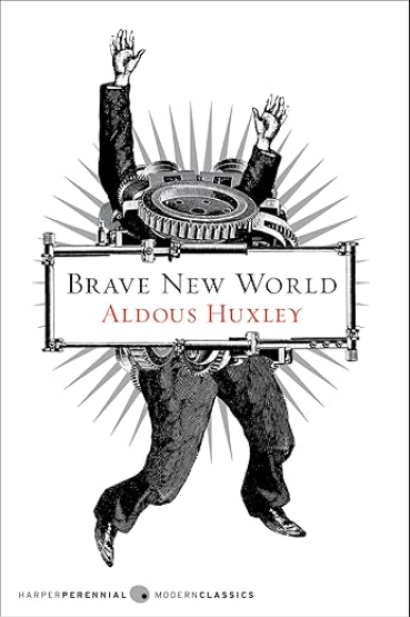
Aldous Huxley’s Brave New World portrays a technologically advanced, highly managed society where citizens are engineered in laboratories and conditioned to be content. The story centres on Bernard Marx and Lenina Crowne, who live in the World State—a global government that has eliminated war and poverty by sacrificing individuality and freedom. When Bernard visits a “Savage Reservation,” he brings back a man born outside the system, challenging the status quo.
What It Predicted
Huxley’s vision included artificial wombs, genetic engineering and mood‑altering drugs. Scholars note that Brave New World is “arguably the single most famous science fiction novel to describe ectogenesis, genetic engineering and related techniques”. In the novel, embryos are grown in artificial wombs at the Central London Hatchery and Conditioning Centre, where their intelligence and physical traits are engineered to fit predetermined social classes. Psychological conditioning ensures that citizens accept their roles, and a drug called soma keeps emotions suppressed. Today, scientists experiment with gene editing and fertility technologies, while debates rage about designer babies, bioethics and social stratification.
Relevance Now
As genome‑editing techniques like CRISPR advance, the possibility of altering human embryos moves from fiction to reality. Research into artificial wombs hints at ectogenesis on the horizon. Ethical questions about who controls these technologies echo Huxley’s warnings. The use of mood‑stabilizing medications to manage mental health mirrors Huxley’s soma, though with important differences. Additionally, the novel’s depiction of a consumer‑driven society obsessed with pleasure and instant gratification mirrors current cultures of constant entertainment and overconsumption.
Why It Still Matters
Brave New World invites reflection on the trade‑offs between technological progress and human values. It challenges readers to consider whether happiness without freedom is genuine. The book remains a cornerstone in discussions about genetic manipulation, psychological conditioning and the societal cost of convenience, making it one of the best science fiction books for ethical inquiry.
Get Book: Brave New World3. Fahrenheit 451 (1953) – Ray Bradbury
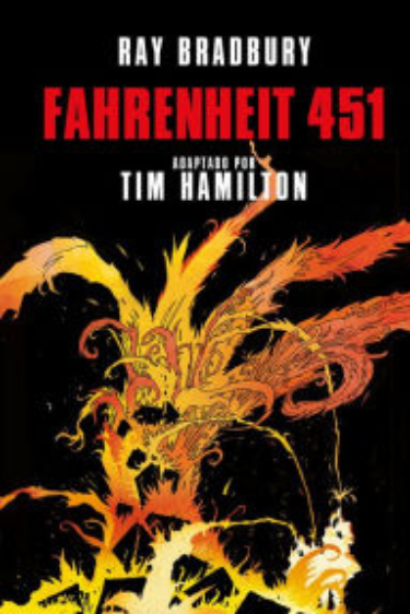
Ray Bradbury’s Fahrenheit 451 envisions a future where books are banned, and “firemen” burn them to maintain conformity. Guy Montag, a fireman, begins to question his role after meeting a young neighbour who values conversation and curiosity. As Montag’s disillusionment grows, he seeks knowledge in a world that discourages thinking.
What It Predicted
Bradbury anticipated both technological and cultural shifts. An analysis by WBUR, Boston’s NPR station, notes that Bradbury “envisioned a future in which our citizens spent their lives in the thrall of vast flat‑screen TVs called ‘parlor walls’ and wore tranquilizing earbuds called Seashells”. These parlor walls resemble today’s wall‑mounted televisions and immersive screens. The Seashells are like modern earbuds—tiny devices delivering continuous entertainment. Bradbury also predicted a society that voluntarily abandons reading. In the novel, books are outlawed because the public stopped reading of its own accord. People prefer quick, sensational media over deep thought, a trend mirrored in today’s fast‑paced digital culture where attention spans shorten and superficial content dominates.
Relevance Now
The parallels between Bradbury’s world and ours are striking. Many people spend hours in front of large screens, consuming streaming media or interacting on social platforms. Earbuds and noise‑cancelling headphones are ubiquitous, creating personal sound bubbles akin to Seashells. Social media and algorithm‑driven news feeds have contributed to information overload and polarization. Bradbury’s critique of society’s self‑inflicted ignorance reminds readers to value critical thinking and real‑world connections.
Why It Still Matters
Fahrenheit 451 endures as a warning about censorship, distraction and the consequences of neglecting literature. It encourages readers to engage with complex ideas and resist the lure of constant entertainment. In a time when misinformation spreads quickly, Bradbury’s call to defend knowledge and individuality remains urgent.
Get Book: Fahrenheit 4514. Neuromancer (1984) – William Gibson
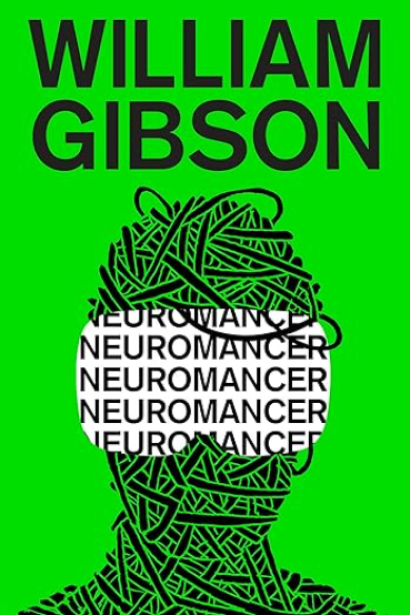
William Gibson’s Neuromancer launched the cyberpunk subgenre and popularized the idea of cyberspace. The novel follows Case, a washed‑up hacker in Chiba City, Japan. After being caught stealing from his employers, Case’s nervous system is damaged so he cannot enter the Matrix, a virtual reality network. A mysterious employer restores Case’s abilities in exchange for pulling off a high‑stakes heist that involves artificial intelligences and corporate intrigue.
What It Predicted
Gibson coined the term “cyberspace” to describe a shared virtual realm. A feature article from The Week reports that Gibson “defined it as ‘widespread, interconnected digital technology,’ similar to today’s internet,” and that he popularised the concept with Neuromancer. The novel imagines users “jacking in” to a virtual world and interacting through avatars, a concept that foreshadowed virtual reality and multiplayer online environments. It also depicts hackers navigating corporate networks, anticipating cybercrime and data theft. Gibson’s virtual world features immersive simulations and digital economies, elements that resemble modern augmented reality, cryptocurrency markets and online gaming.
Relevance Now
Today’s internet is an interconnected digital space where people work, play and socialise. Cybersecurity has become a major concern as hacking threatens businesses and governments. Virtual and augmented reality platforms are developing rapidly, bringing Gibson’s cyberspace closer to reality. The novel’s themes of corporate dominance and blurred boundaries between human and machine are also relevant as technology firms wield immense influence and as AI systems grow more sophisticated. Neuromancer remains a touchstone for futuristic fiction books exploring the digital frontier.
Why It Still Matters
By imagining cyberspace decades before the web, Neuromancer not only predicted the internet but shaped our vocabulary for it. It continues to inspire technologists, writers and designers who strive to build immersive digital experiences. The novel cautions about technology’s potential to empower and enslave, reminding readers to consider who controls the code and to protect human agency in a digital age.
Get Book: Neuromancer5. The Handmaid’s Tale (1985) – Margaret Atwood
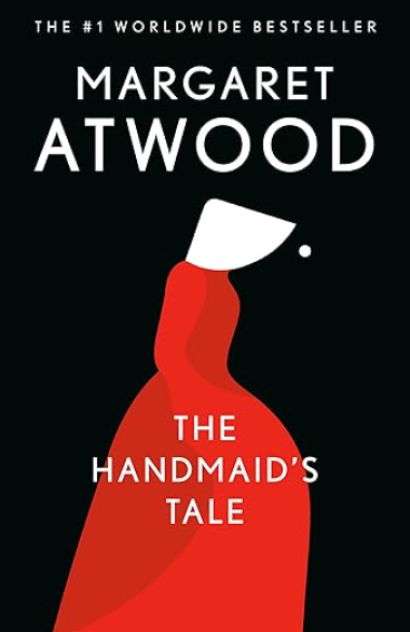
Margaret Atwood’s The Handmaid’s Tale describes a near‑future theocracy called Gilead, located in what was once the United States. Environmental disasters and declining fertility have led a fundamentalist regime to overthrow the government. Women lose their rights, and fertile women—known as Handmaids—are forced to bear children for elite couples. The novel follows Offred, a Handmaid who recalls her life before the regime and quietly resists her oppressors.
What It Predicted
Atwood’s story did not claim to be prophecy, but its elements feel disturbingly familiar. A Guardian article notes that the novel deals with “reproductive rights, with the sudden accession to power of a theocracy in the United States”. The themes of restricted reproductive freedom and religious extremism echo contemporary debates about abortion access and the separation of church and state. Environmental degradation and declining fertility, both central to the novel, are concerns today as climate change affects ecosystems and reproductive health. The book also anticipates modern forms of social control—women are forbidden to read, their movements are tracked, and their identities are reduced to their reproductive roles.
Relevance Now
Recent political events have brought reproductive rights back into the spotlight. Legal restrictions on abortion and birth control in various countries reflect the kind of control depicted in Gilead. Climate‑related disasters and the rise of authoritarian movements make Atwood’s dystopia feel less fictional. The novel also resonates with discussions around data privacy; controlling information is a way to control people. The popularity of the television adaptation demonstrates how deeply these themes resonate with modern audiences seeking dystopian science fiction that reflects their anxieties.
Why It Still Matters
The Handmaid’s Tale serves as a powerful warning about the erosion of rights and the fragility of democracy. It reminds readers that freedom can be lost quickly and that vigilance is necessary to protect personal autonomy. The novel continues to inspire activism and conversation around gender equality, making it an essential read for those exploring sci‑fi novels about the future that intersect with real‑world social issues.
Get Book: The Handmaid’s Tale6. Snow Crash (1992) – Neal Stephenson
Neal Stephenson’s Snow Crash is a fast‑paced cyberpunk adventure set in a near‑future United States where governments have collapsed and corporations rule. The protagonist, Hiro Protagonist, is a computer hacker and pizza delivery driver for the Mafia. He discovers a digital virus called Snow Crash that affects humans both online and offline. The story combines ancient linguistics with futuristic technology, moving between the physical world and the Metaverse—a virtual reality space where avatars interact.
What It Predicted
Stephenson’s novel coined the term “Metaverse” and foresaw virtual worlds where people live digital lives. A description from Conversation Tree Press notes that Snow Crash “redefined speculative fiction and foresaw the rise of virtual worlds, digital economies, and the internet as we know it”. The book portrays the Metaverse as a “sprawling digital landscape where avatars interact, economies thrive, and a mysterious virus threatens to blur the boundaries between code and consciousness”. This vision aligns closely with today’s virtual reality platforms and online communities. Stephenson also predicted decentralized corporate city‑states, encrypted currencies and widespread gig economies.
Relevance Now
The term Metaverse has entered everyday language as tech companies build platforms for virtual meetings, gaming and commerce. Virtual reality headsets and immersive social experiences echo Stephenson’s ideas. Digital currencies and blockchain technology resemble the novel’s depiction of separate economic systems. Moreover, the book’s portrayal of corporate control and fragmented states resonates with the rise of mega‑corporations and private governance in modern society.
Why It Still Matters
Snow Crash remains influential because it anticipates technology’s potential to transform how we live and interact. It challenges us to consider who will govern digital spaces and how virtual realities might impact identity and community. As companies invest billions in building the next generation of online worlds, Stephenson’s insights are more relevant than ever.
Get Book: Snow CrashWhy Science Fiction Often Predicts the Future
Science fiction authors are not clairvoyants; they are keen observers. They watch the latest discoveries, political movements and cultural shifts and ask, “What if…?” By extrapolating from existing trends, writers create plausible scenarios that later appear prophetic. When H.G. Wells wrote about time machines and genetic manipulation, he was building on the scientific debates of his era. Similarly, modern authors use emerging research in AI, quantum computing and environmental science to imagine future breakthroughs. This process of informed speculation explains why science fiction books that predicted the future often feel so accurate.
Another reason lies in politics and human behaviour. Fiction offers a safe space to explore how power might be abused, how societies could collapse or adapt and how individuals might respond. Dystopian stories like Nineteen Eighty‑Four and The Handmaid’s Tale exaggerate real political trends to show possible extremes. By doing so, they highlight warning signs and encourage readers to engage in civic life. When these warnings are heeded, the worst outcomes can be avoided; when they are ignored, fiction becomes reality.
Finally, science fiction influences the very technologies it describes. Engineers and programmers often cite novels such as Neuromancer and Snow Crash as inspiration for virtual reality and cyberspace. This feedback loop—imagination inspiring innovation—means that speculative ideas sometimes guide research directions. As a result, futuristic fiction books not only predict developments but actively shape them. By inspiring curiosity and caution, they help society navigate the unknown.
Conclusion
Science fiction is more than escapism; it is a mirror and a compass. The six books explored here—Nineteen Eighty‑Four, Brave New World, Fahrenheit 451, Neuromancer, The Handmaid’s Tale and Snow Crash—show how creative writers have anticipated technologies, social changes and political struggles. From mass surveillance and genetic engineering to virtual reality and reproductive rights, these narratives reveal the power of imagination to shine a light on possible futures. By reading these science fiction books that predicted the future, we gain insight into current debates and draw lessons for tomorrow.
As AI becomes more integrated into our lives, as screens and headphones continue to mediate our experiences and as new technologies challenge ethical boundaries, these stories remind us to ask difficult questions. Who benefits from innovation? What freedoms might be lost? How can we shape technology for the common good? Revisiting these prophetic works not only honours their authors but equips us to engage thoughtfully with our rapidly changing world.
