
Dystopian fiction is one of those genres that sounds heavy until you actually start reading it — and then you can’t stop.
It’s the genre that gave us Big Brother, the Hunger Games, handmaids in red cloaks, and a boy named Jonas who discovers that his perfect world is hiding something terrible. It’s the genre that takes the world we live in, turns a dial slightly too far in the wrong direction, and asks: what then? And the reason it keeps pulling readers back, decade after decade, is that it never feels entirely like fiction. The surveillance. The control. The slow erosion of things people assumed were permanent. Dystopian writers have an uncomfortable habit of being right.
If you’ve been curious but don’t know where to begin, this guide is for you. Not a list of every dystopian book ever written — just a clear, honest path through the genre, from the easiest entry points to the ones that will genuinely change how you see the world.
First, Understand What Dystopian Fiction Actually Is
Utopia is the idea of a perfect society — everything ordered, everyone provided for, no conflict, no chaos. Dystopia is what happens when someone tries to build that perfect society and gets it very, very wrong. Or, in the darker interpretations, gets it exactly right for the people in power and catastrophically wrong for everyone else.
The best dystopian fiction is never really about the future. It’s about now — about the systems and assumptions already quietly operating around us, exaggerated just enough to be visible. George Orwell wrote 1984 as a warning about the political movements he was watching in the 1940s. Margaret Atwood wrote The Handmaid’s Tale by drawing only on things that had actually happened somewhere in the world at some point in history. That’s what makes the genre so enduring. The worlds are imaginary. The fears are not.
Stage One: Start Here (Accessible and Unmissable)
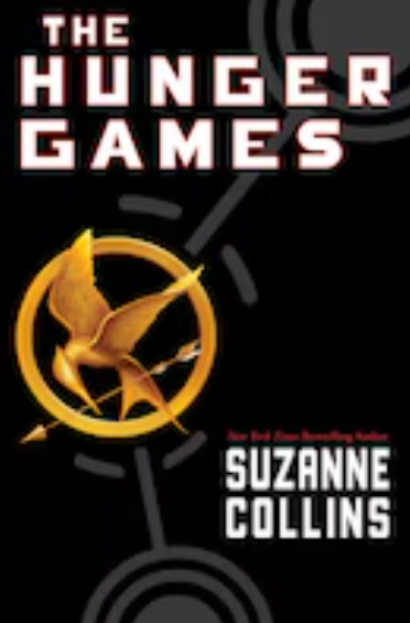
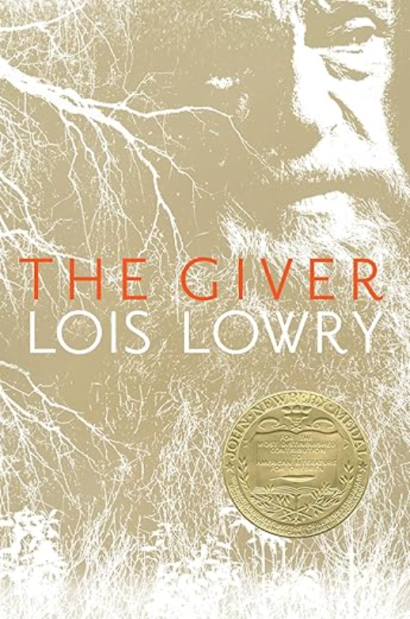
These are the books to begin with if you are completely new to the genre. They are propulsive, emotionally engaging, and written in ways that don’t require any familiarity with science fiction or speculative literature to enjoy.
The Hunger Games — Suzanne Collins
If you want to understand why dystopian fiction has the audience it does, start here.
Suzanne Collins set her story in Panem, a future North America divided into twelve districts ruled by a wealthy Capitol. Every year, each district is forced to send two young people — called tributes — to compete in the Hunger Games, a televised fight to the death staged as entertainment for the Capitol and punishment for the districts. The story follows Katniss Everdeen, a seventeen-year-old from the poorest district, who volunteers to take her younger sister’s place.
What makes this book work so well as an entry point is that it never slows down. Collins has a gift for momentum — the story pulls you forward from the first page and doesn’t really let go. But underneath the pace is a serious argument about media, spectacle, power, and what it costs ordinary people to survive systems designed to break them. Millions of readers came for the story and left thinking about something much larger. That’s what the best dystopian fiction does.
The Giver — Lois Lowry
Short, deceptively quiet, and one of the most affecting books the genre has produced.
The world of The Giver looks, at first, like a genuine utopia. A small community where everything is orderly, everyone has a role, pain and conflict have been eliminated, and life runs smoothly and without friction. Jonas is twelve years old when he is selected for a special assignment — to become the Receiver of Memory, the one person in the community who holds all the memories of the world before sameness was imposed. What he learns, slowly and without any melodrama, changes everything.
This is a good starting point because it approaches the genre gently. The horror builds quietly, and by the time it arrives, it lands harder because of how long Lowry made you wait. It’s also a relatively short read — you can finish it in an afternoon — and it introduces one of the genre’s most important questions: is a life without suffering worth living if it also means a life without genuine choice?
Stage Two: The Classics You Actually Need to Read
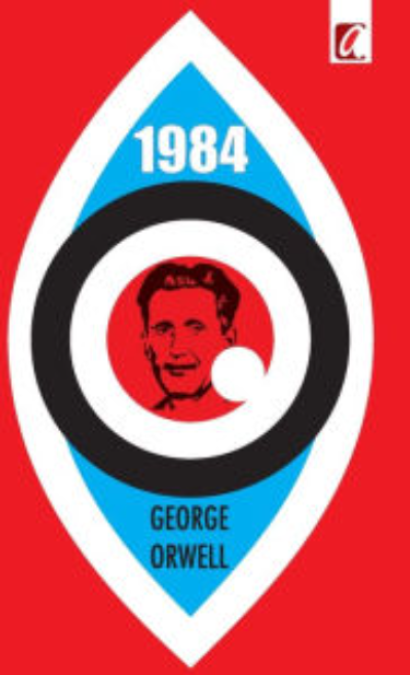
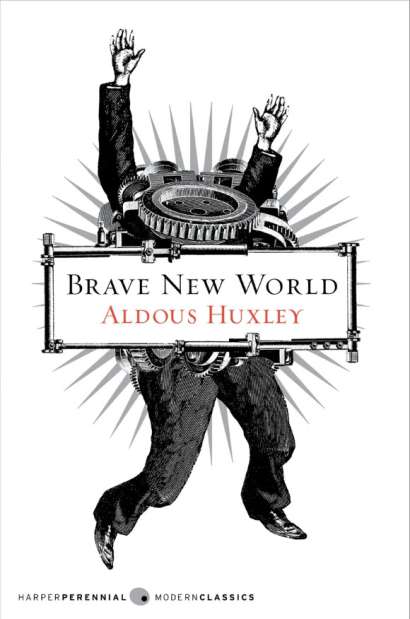
Once you’ve found your footing in the genre, these are the books that built it. They are older, slower in places, and more demanding — but they are the reason dystopian fiction is taken seriously as a literary form, and reading them will deepen everything you read afterward.
1984 — George Orwell
There is a reason this book has been in continuous print since 1949 and shows no sign of stopping.
Orwell’s vision of Oceania — a totalitarian state where the ruling Party controls not just behaviour but language, memory, and thought itself — is one of the most influential pieces of fiction ever written. The concepts it introduced have become part of how the world describes itself: Big Brother, doublethink, the memory hole, Newspeak. The story follows Winston Smith, a low-ranking Party member who begins, quietly and at great personal risk, to question the reality he has been given.
1984 is not a comfortable read. It is deliberately bleak, and it earns that bleakness honestly. But it is also essential. No other book in the genre does more to explain how control actually works — not through brute force alone, but through the patient, systematic destruction of the mental tools people need to resist.
Brave New World — Aldous Huxley
Where 1984 imagines a world controlled through fear and pain, Brave New World imagines one controlled through pleasure — and in some ways that is more unsettling.
Huxley’s future is technologically advanced, comfortable, and deeply strange. People are engineered from birth into predetermined social castes. Emotional pain has been eliminated through a drug called soma. Sex is casual and universal. Art and religion have been abolished because they create the kind of deep feeling that leads to instability. Everyone is happy, in the way that a person given enough sedatives is happy. The question the book forces is whether that counts.
If you read 1984 and found yourself thinking about government surveillance and political repression, read Brave New World immediately after. Together they cover both ends of the spectrum of how freedom gets lost — taken by force, or surrendered willingly in exchange for comfort. Huxley’s version is the one that requires more thought, but it is the one that tends to stay with readers longer.
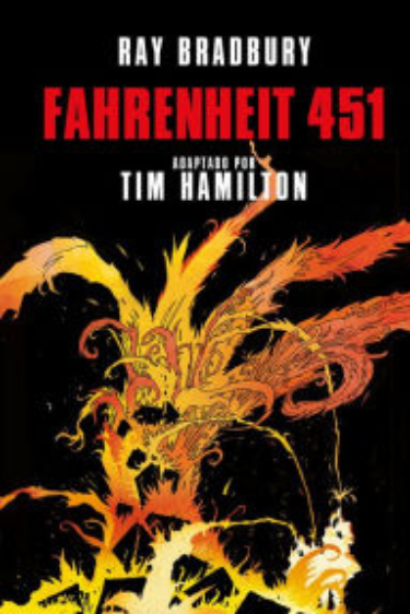
Fahrenheit 451 — Ray Bradbury
A novel about a world where books are burned, written by a man who loved books so completely that the idea was physically painful to him.
Guy Montag is a fireman — but in this future, firemen don’t put out fires. They start them. Their job is to burn books, which have been outlawed in a society that has replaced reading with wall-sized television screens and constant shallow entertainment. Montag has never questioned this until a chance encounter with a young woman who asks him something nobody has thought to ask before: are you happy?
Bradbury’s book is shorter and more poetic than Orwell or Huxley, and it operates more on feeling than on argument. But what it does — its exploration of distraction, passivity, and the slow death of a culture that stops thinking — feels more relevant with every passing year, not less.
Stage Three: Expand Into Modern Masterpieces
The classics established what dystopian fiction could do. These contemporary books take the genre further — into new territories of gender, race, ecology, and the specific fears of the twenty-first century.
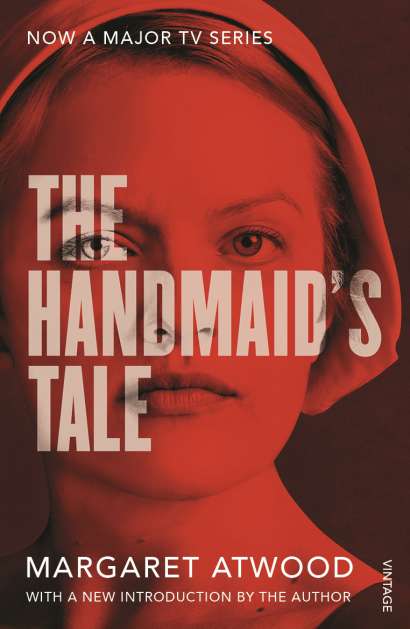
The Handmaid’s Tale — Margaret Atwood
One of the most argued-about novels of the last fifty years, and for good reason.
Atwood set her story in Gilead, a near-future theocracy built on the ruins of the United States, where plummeting birth rates have led the new regime to enslave fertile women as handmaids — vessels for the children of the ruling class. The story is narrated by Offred, a handmaid who remembers the world before and is trying to survive the world she is in now.
What makes this book remarkable is what Atwood said about writing it: she included nothing that had not already happened somewhere in the world. Every element of Gilead’s cruelty is drawn from documented human history. That decision — not to invent new horrors but to assemble existing ones — gives the novel a weight that pure imagination would not have produced. It is a book about women’s bodies and political power, about memory and resistance, and about what people do to keep something of themselves alive when a system is designed to erase them entirely.
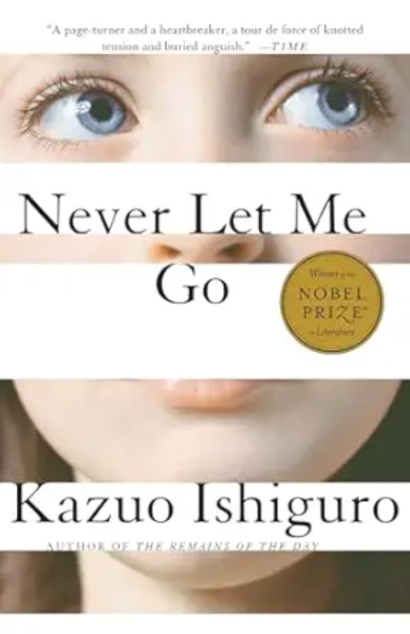
Never Let Me Go — Kazuo Ishiguro
Quieter than anything else on this list, and one of the most devastating.
Kathy, Ruth, and Tommy grew up together at Hailsham, an unusual English boarding school. They were told they were special. The novel unfolds slowly, narrated by Kathy as an adult looking back, gradually revealing what made them special and what it means for the lives they are able to live. It is almost impossible to describe the plot without removing what makes it powerful — the discovery happens alongside the reader, and it should.
Ishiguro writes dystopia as an interior experience rather than an action story. There are no rebellions here, no heroic resistance. Just three people navigating a life shaped by forces they did not choose, trying to find meaning and love inside the time they are given. It is the saddest book on this list, and one of the most human.
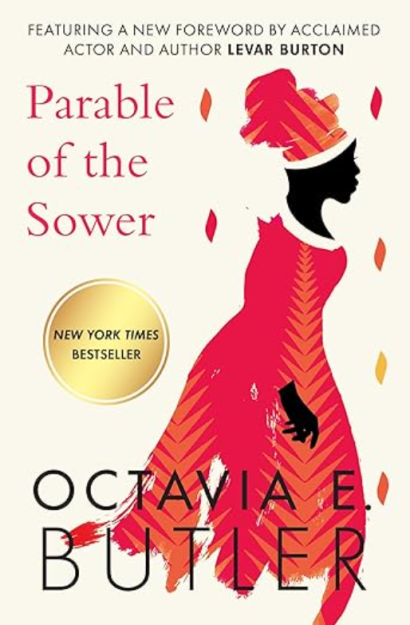
Parable of the Sower — Octavia Butler
The dystopian novel that readers keep returning to because it keeps feeling more accurate.
Butler set her story in a near-future California where climate change, income inequality, and corporate power have pushed society to the edge. Fifteen-year-old Lauren Olamina lives behind the walls of a small gated community, watching the world outside slowly collapse, and begins quietly writing down a new belief system she is building from scratch — one she will need when everything finally falls apart. Which it does.
Butler was writing in 1993 about things that feel specific to now — not because she predicted the future, but because she understood the present clearly enough to follow its logic forward. This is a book about building something new when the old structures fail, and about what kind of person survives and what kind of person leads. It is one of the most important works the genre has produced.
Stage Four: Go Deeper — For Readers Who Want More
Once you’ve moved through the first three stages, you have a genuine foundation in dystopian fiction. From here, the genre opens up into subgenres and specialist directions. If you loved the political control of 1984, try Yevgeny Zamyatin’s We — the Russian novel that Orwell read before writing his own. If the feminist angle of The Handmaid’s Tale gripped you, Naomi Alderman’s The Power takes that conversation somewhere unexpected. If you found Never Let Me Go unbearably moving, Station Eleven by Emily St. John Mandel offers a post-pandemic world with a very different emotional register — one more interested in what survives than what is lost.
The genre is larger than it looks from the outside. And once you’re inside it, it tends to be difficult to leave.
Your Reading Path at a Glance
If you want a simple order to follow, this works well:
Start with The Hunger Games or The Giver — whichever appeals more. Then move to 1984, followed by Brave New World. Add Fahrenheit 451 before stepping into the modern era with The Handmaid’s Tale. Then Never Let Me Go, and then Parable of the Sower.
That is seven books. By the end of them, you will understand what dystopian fiction is, what it does better than any other genre, and why the best of it never really feels like fiction at all.
