
Stephen Colbert has built a career out of asking sharp questions while hiding a tender heart behind ridiculous bits and perfectly timed pauses. On TV, you see the satire, the improv, the political jabs—but if you really want to understand how his brain and heart work, you have to look at what he reads. Stephen Colbert’s reading list swings from grief and faith to fascism, satire, and wildly nerdy sci-fi; it’s equal parts comfort and confrontation, much like his best monologues.
In this guide to Stephen Colbert’s 10 essential books, we’re not just dropping titles. We’re unpacking what each book is about, why you should read it, and what it reveals about Colbert himself—his obsession with justice, his Catholic-tinged moral compass, his very real experience of grief, and his deep love of stories that are both smart and silly. If you’ve ever searched for “Stephen Colbert books about politics, grief, and faith” or wanted lessons from his quietly serious reading life, consider this your shortcut.
The Modern Loss Handbook: An Interactive Guide to Moving Through Grief and Building Your Resilience by Rebecca Soffer
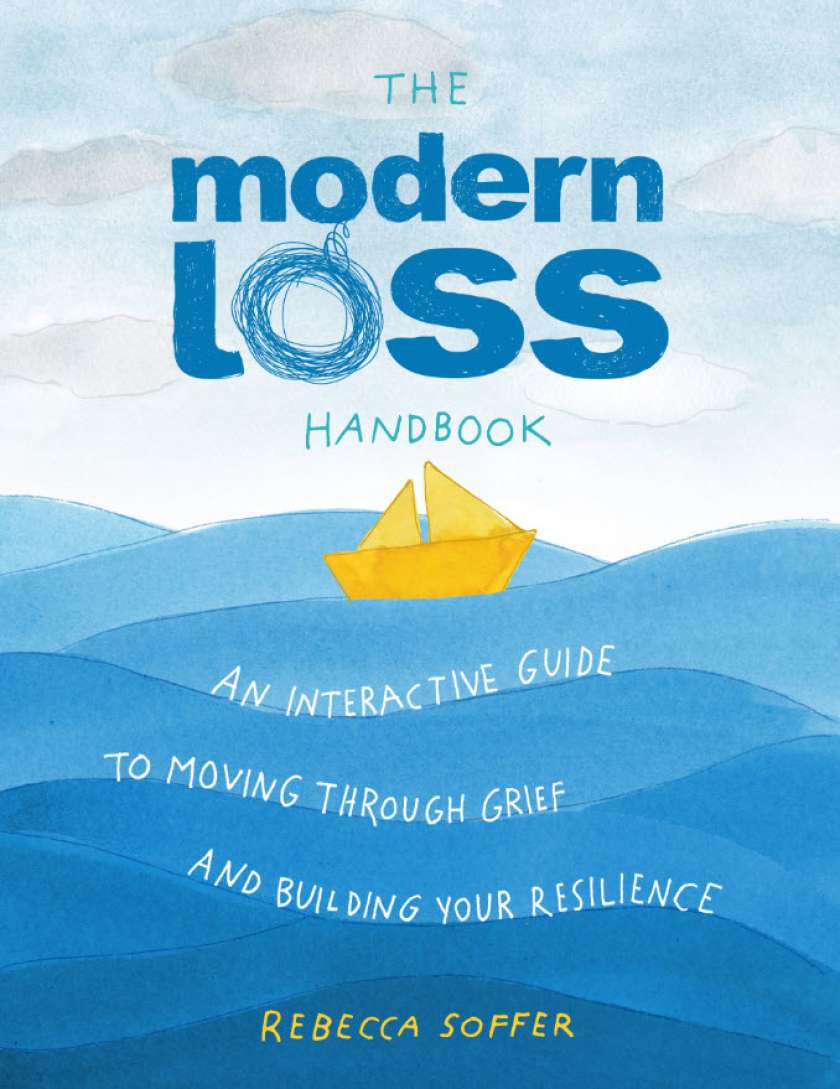
One of the most revealing titles on Stephen Colbert’s reading list about grief and resilience, The Modern Loss Handbook is a practical, conversational guide for people living with loss in all its forms—not just death, but divorce, estrangement, identity shifts, and “the life you thought you’d have.”
Written by Rebecca Soffer, co-founder of the Modern Loss community, the book mixes short essays, prompts, checklists, and real stories from a wide range of people. It doesn’t try to “fix” grief or dress it up in platitudes; instead, it treats loss as something you live with rather than “get over,” and gives you concrete ways to navigate anniversaries, awkward social situations, work, dating, holidays, and those random moments when grief blindsides you at the grocery store.
Why You Should Read It
If you’re looking for Stephen Colbert–approved books about grief that are honest but not crushing, this is a standout. Colbert has spoken openly over the years about losing his father and two brothers in a plane crash when he was ten, and how that trauma shaped his faith and his comedy. A book like this makes sense on his shelf: it treats sorrow as something that can coexist with humor, work, and ordinary life.
Unlike more clinical grief guides, The Modern Loss Handbook feels like a smart, slightly irreverent friend sitting with you on the couch, saying, “Yep, this is awful—and here are some ways we can make it suck just a little less.” It’s especially helpful if you:
- Feel like traditional grief books don’t speak to your life
- Want practical tools (scripts, exercises, ideas) rather than just theory
- Are trying to support someone who’s grieving and don’t know what to say
In a list that includes political theory, satire, and literary fiction, this book shows the deeply human, off-camera side of Colbert: the man who knows loss is part of the story and still chooses to lean into connection and meaning.
Stephen Colbert’s Take
Colbert introduced The Modern Loss Handbook with the kind of quiet sincerity that tells you it’s not just a casual recommendation:
“A new book from an old friend. Grief is hard to talk about, but this book does it beautifully.”
Coming from someone who’s turned his own heartbreak into a deeper empathy on screen, that praise carries weight. On Stephen Colbert’s reading list about grief, faith, and how to live with what’s broken, this handbook isn’t just a resource—it’s a reflection of his belief that the hardest things are exactly the ones we need better language for.
Get Book: The Modern Loss Handbook!Prequel: An American Fight Against Fascism by Rachel Maddow
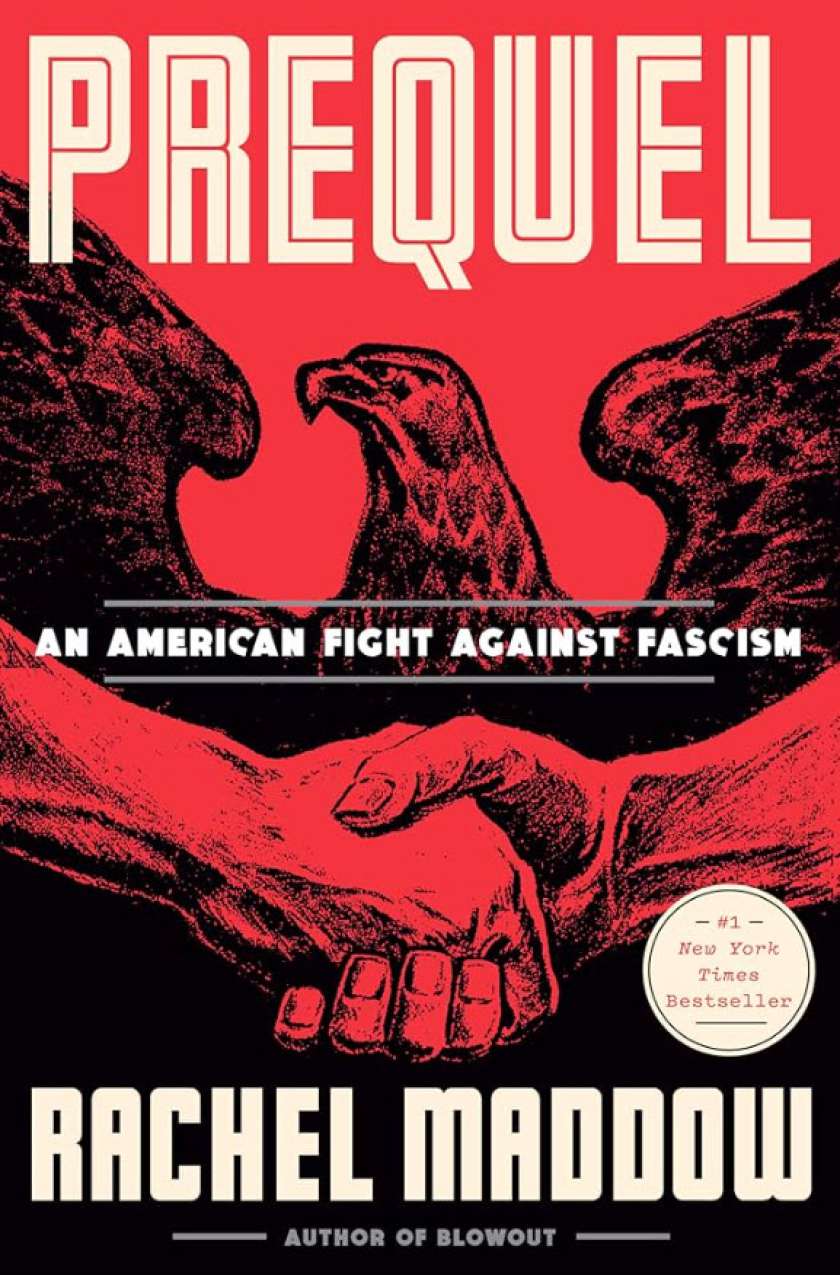
On the political side of Stephen Colbert’s reading list, Prequel is classic Rachel Maddow: deeply researched, darkly fascinating, and disturbingly relevant.
The book uncovers a largely forgotten chapter of U.S. history between World War I and World War II, when homegrown fascist sympathizers, Nazi agents, and powerful American figures quietly worked to undermine democracy from within. Maddow traces how these networks formed—through money, media, influence, and disinformation—and how a small group of prosecutors, journalists, and public servants fought back, often at great personal and professional risk. It reads like a thriller, but almost everything in it is drawn from archival documents, court records, and congressional investigations.
Why You Should Read It
If you want Stephen Colbert–style books about politics, fascism, and the fragility of democracy, Prequel is right on target. Maddow’s central argument is unsettling: the threats we’re worried about now are not new. The playbook—economic fear, conspiracy, propaganda, cozying up to authoritarian regimes abroad—has been tested before on U.S. soil. Knowing how earlier generations resisted those threats gives today’s readers a roadmap for what vigilance can actually look like.
This is a must-read if you:
- Are anxious about rising authoritarianism and want more than “vibes” to understand it
- Like your history with narrative momentum and clear through-lines
- Appreciate reporting that connects individual characters (crooked businessmen, useful idiots, quiet heroes) to big structural dangers
In the context of Colbert’s reading list about justice and power, Prequel sits alongside his comedy: both are about taking something terrifying—creeping fascism—and making it understandable enough that you can respond, instead of just doom-scrolling.
Stephen Colbert’s Take
Colbert signaled his enthusiasm for the book with a simple, anticipatory line:
“Can’t wait to dive into Rachel Maddow’s new book.”
Given how often he’s hosted Maddow and how much of his show is devoted to unpacking threats to democracy with humor and clarity, that excitement tracks. On Stephen Colbert’s bookshelf, Prequel isn’t just a history lesson; it’s a mirror for the present—and a reminder that the fight against fascism has always depended on people who are willing to pay attention, speak up, and, yes, sometimes use a platform to make the danger impossible to ignore.
Get Book: Prequel: An American Fight Against Fascism!The Silmarillion by J.R.R. Tolkien
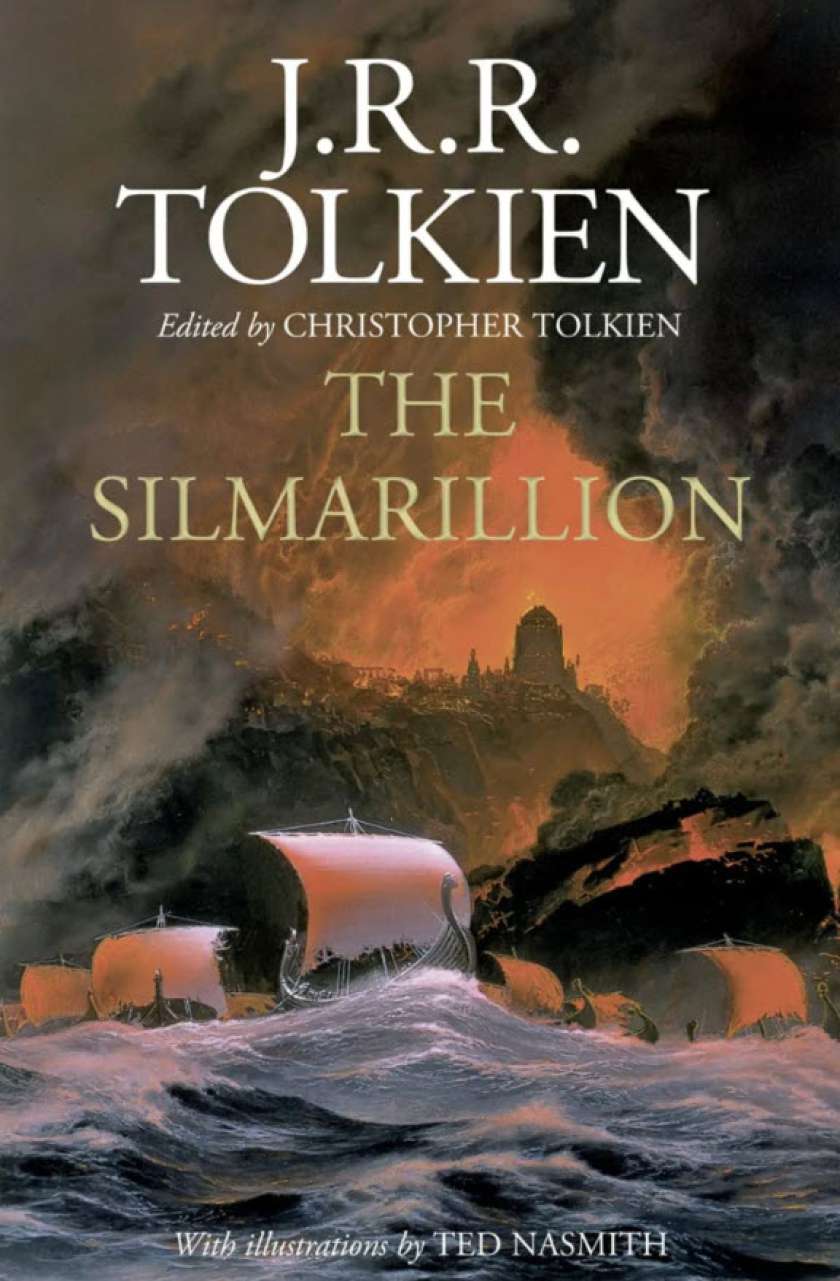
If The Lord of the Rings is the story Stephen Colbert can quote in his sleep, The Silmarillion is the deep lore that proves just how far down the Tolkien rabbit hole he’s willing to go.
This dense, mythic volume gathers the legends, creation stories, and ancient wars of Tolkien’s universe: the making of Middle-earth, the rebellion of the Elves against the godlike Valar, the forging and theft of the Silmarils, the tragic fates of Fëanor’s line, and the first rise of Morgoth and Sauron. Structurally, it reads more like a sacred text or a collection of epic myths than a straightforward novel—genealogies, battles, betrayals, doomed romances, and the long, slow arc of good and evil playing out over ages.
Why You Should Read It
If you’re looking for Stephen Colbert–approved Tolkien beyond The Hobbit and The Lord of the Rings, The Silmarillion is the ultimate “I’m really in this” book. It’s not easy—there are dozens of names and places, and the prose is formal and biblical—but the payoff is huge if you’re obsessed with Middle-earth. You discover:
- How Sauron fits into a much larger history of corruption
- Why the Elves are so weary and tragic by the time Frodo shows up
- The original “great jewels” whose story echoes later Rings lore
- The way Tolkien thought about creation, free will, pride, and sacrifice on a cosmic scale
For fans of Colbert’s blend of nerdy enthusiasm and moral seriousness, this makes perfect sense: The Silmarillion is fantasy as theology, a meditation on power, rebellion, and redemption dressed up as invented mythology. It’s ideal if you want your escapism to come with a side of metaphysics—and if you’re willing to reread a few passages (or keep a character list) while your brain adjusts.
Stephen Colbert’s Take
Colbert has made no secret of his Tolkien obsession—correcting guests on elvish pronunciation, rattling off deep-cut lore, and gleefully out-nerding even the Lord of the Rings casts on his show. While he’s talked most often about The Lord of the Rings on air, the kind of granular knowledge he displays (“actually, that’s from the First Age…”) pretty much guarantees he’s spent serious time with The Silmarillion. On Stephen Colbert’s reading list about epic worlds, moral struggle, and the long fight against darkness, this is the book that explains why his Middle-earth references go way beyond hobbits and Mordor—he’s drawing from the source mythology itself.
Get Book: The Silmarillion!The Sparrow by Mary Doria Russell
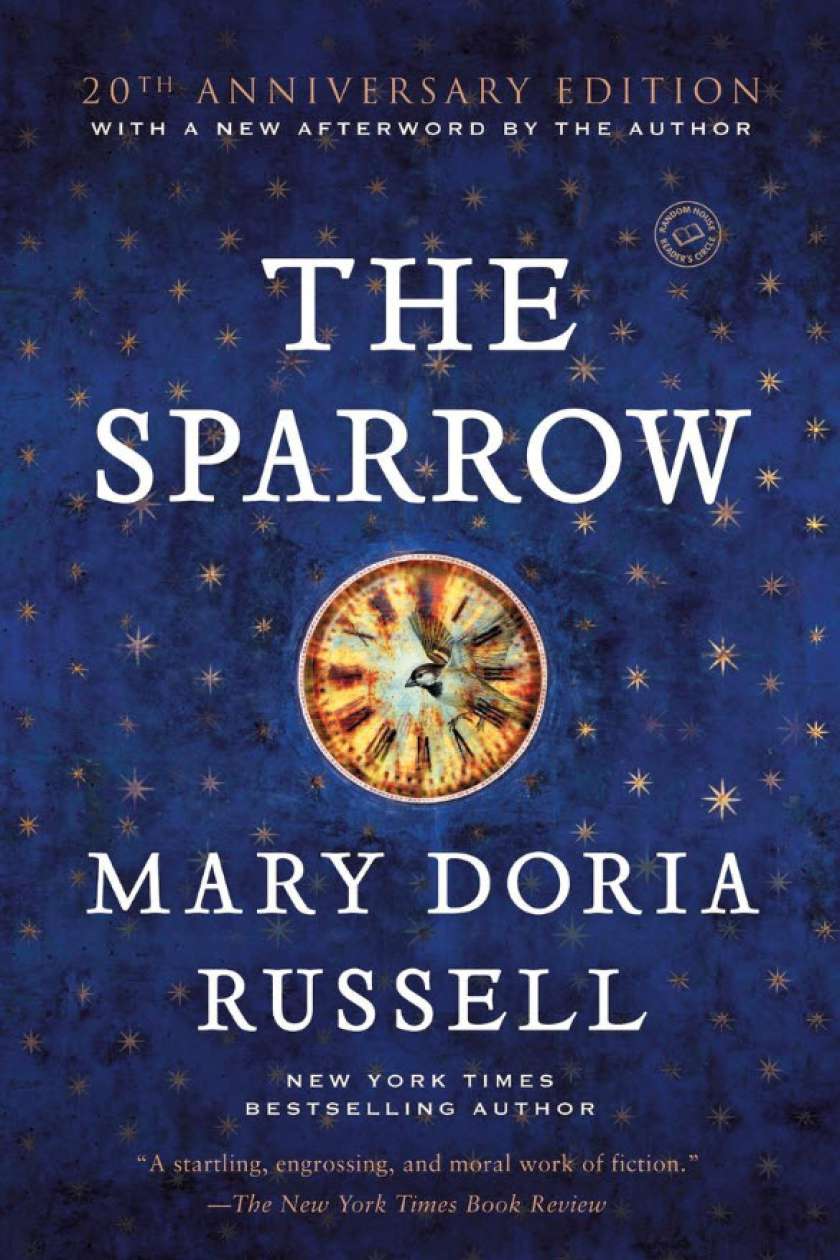
On the surface, The Sparrow is a first-contact sci-fi novel: a group of Jesuit priests and scientists intercept beautiful alien music coming from a distant planet and set off on a mission to meet the species that created it.
But Russell tells the story in two timelines—before and after the trip—and we slowly discover that only one member of the crew, Father Emilio Sandoz, has returned. He’s physically mutilated, spiritually shattered, and barely able to speak about what happened on the planet Rakhat. As the narrative moves between the hopeful planning of the mission and the devastated aftermath, the book becomes a raw exploration of faith, suffering, unintended consequences, and what it means to keep believing in a good God when everything that happened looks like a cosmic betrayal.
Why You Should Read It
If you’re drawn to Stephen Colbert’s mix of sharp humor and deep spiritual questioning, The Sparrow feels like it belongs on your own nightstand too. It’s science fiction that reads like literary fiction, asking huge questions about evil, grace, and human hubris without ever giving easy answers. Russell forces you to sit with moral ambiguity: the crew’s intentions are noble, the mission is rooted in curiosity and compassion—and yet the outcome is horrific. For readers who like their “Christianity meets aliens” stories to also grapple honestly with doubt, trauma, and the limits of human understanding, this is one of those books that lingers long after you close it.
Stephen Colbert’s Take
Colbert has long been open about his Catholic faith and his belief that suffering and grace are intertwined—summed up in his famous line that he has learned to “love the thing that [he] most wish[es] had not happened.”
The Sparrow lives in that same tension: a story where beauty and horror coexist, where faith is both tested and, in a strange way, deepened. It’s exactly the kind of book you’d expect to find on a Stephen Colbert reading list—intelligent, morally complex, quietly devastating, and willing to stare straight at pain without losing its sense of wonder.
Get Book: The Sparrow!To Kill a Mockingbird by Harper Lee
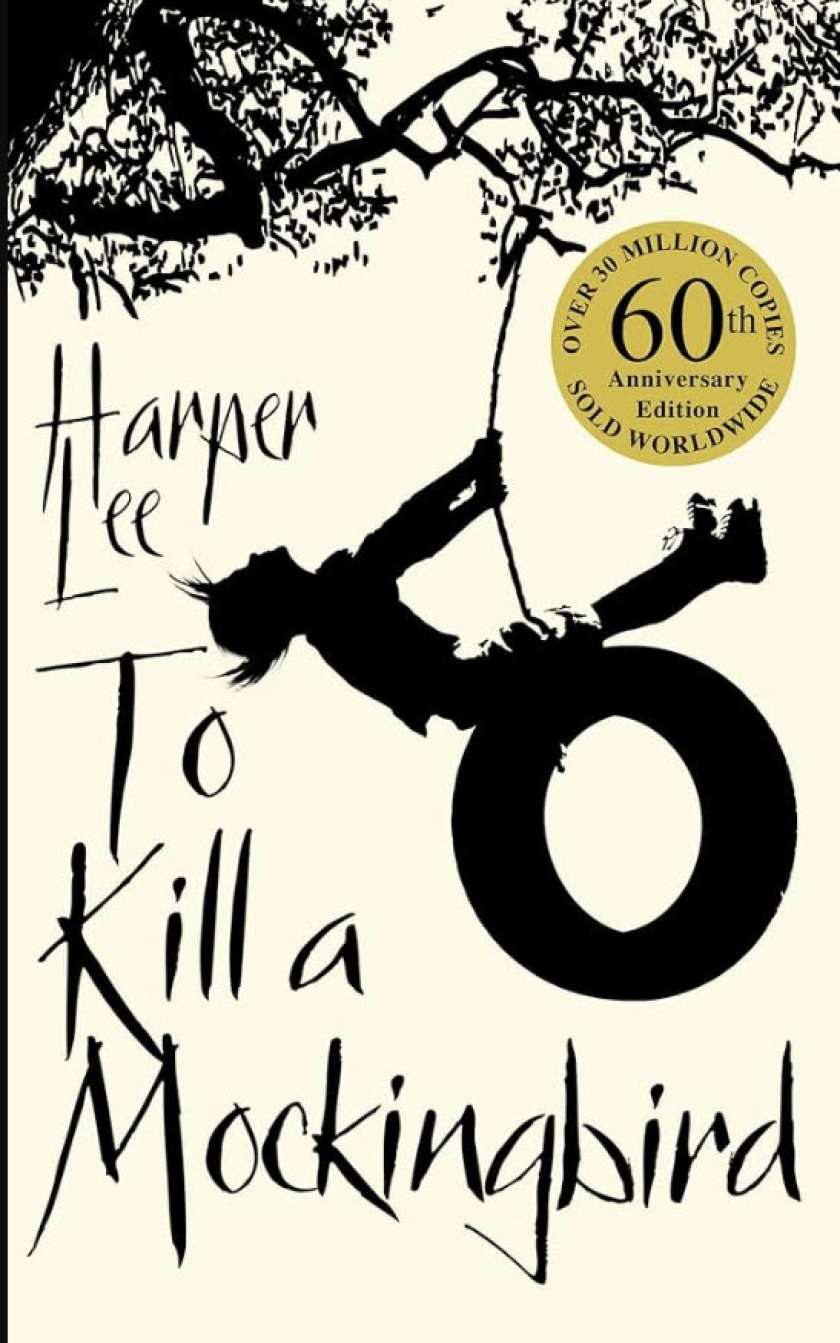
You can’t really map Stephen Colbert’s reading life without landing on To Kill a Mockingbird. Set in the Depression-era South and narrated by young Scout Finch, the novel follows her father, Atticus, as he defends Tom Robinson, a Black man falsely accused of raping a white woman.
Through Scout’s eyes, we see small-town gossip, childhood games, schoolyard politics—and, slowly, the brutal reality of racism, injustice, and cowardice around them. Parallel to the trial is the mystery of Boo Radley, the reclusive neighbor the children have turned into a kind of monster story, only to discover that he may be the quietest hero of all. It’s a book about law and conscience, but also about how kids learn (or unlearn) the stories adults tell them about who counts and who doesn’t.
Why You Should Read It
If you’re looking for Stephen Colbert–style books about justice, empathy, and moral courage, To Kill a Mockingbird is core curriculum. Lee makes the big themes—systemic racism, the failures of the legal system, the cost of doing the right thing—feel painfully intimate by keeping the camera at Scout’s height. Atticus doesn’t “fix” Maycomb; he just does what’s right in a rigged system and lets his children watch him do it.
It’s the kind of novel that trains your moral imagination:
- You learn to see how “good” people participate in injustice by staying quiet.
- You feel what it means to stand alone in a courtroom, or on a front porch, when the town turns on you.
- You’re pushed to look past rumor and fear to the Boo Radleys in your own life—the people everyone talks about but no one really sees.
As part of Colbert’s reading list about power, law, and mercy, this book sits right at the crossroads: a courtroom drama, a coming-of-age story, and a blueprint for why bearing witness still matters even when you don’t win.
Stephen Colbert’s Take
Colbert has never made a big, formal “this is my favorite classic” declaration on air about To Kill a Mockingbird the way he has with Tolkien, but its presence in his recommended reading lists makes total sense. His comedy is full of Atticus-style moves: using wit to expose hypocrisy, insisting on the humanity of the people being dehumanized, and teaching an audience—often with jokes—how to look more closely at what’s considered “normal.”
On Stephen Colbert’s bookshelf, To Kill a Mockingbird is the quiet backbone: the novel that shows how one person with a spine, a courtroom, and a couple of kids watching from the balcony can still bend the story a little closer toward justice, even when the verdict goes the wrong way. It explains a lot about why his satire always circles back to empathy.
Get Book: To Kill a Mockingbird!Cat’s Cradle by Kurt Vonnegut
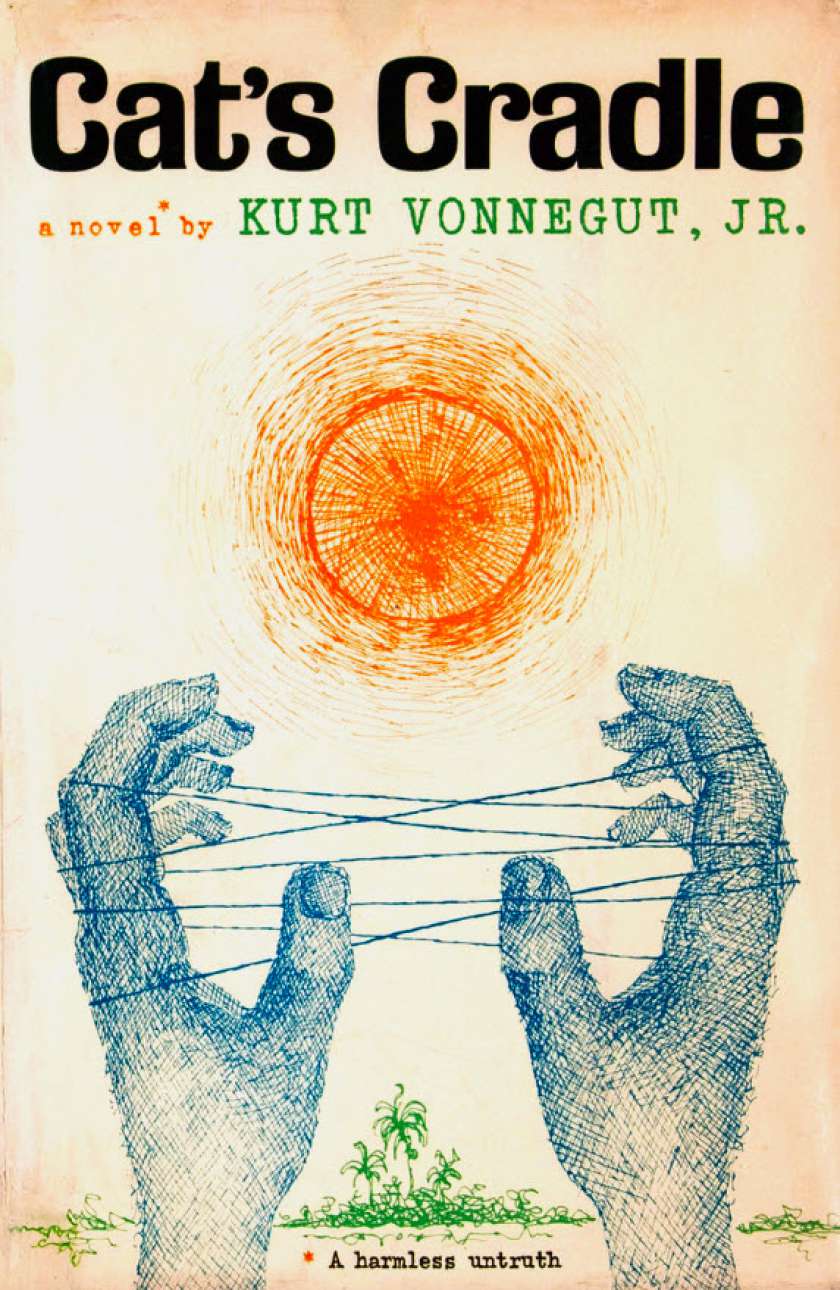
Sliding straight into the weird, Cat’s Cradle is exactly the kind of dark, absurdist satire you’d expect to find on Stephen Colbert’s reading list. The novel follows John (who sometimes calls himself Jonah) as he sets out to write a book about what “important Americans” were doing on the day the atomic bomb was dropped on Hiroshima.
That research leads him to the Hoenikker family: the late Dr. Felix Hoenikker, one of the fictional “fathers of the bomb,” and his three deeply odd adult children. Through them, John stumbles onto Ice-Nine, a substance capable of freezing any liquid it touches—i.e., a world-ending weapon hiding in plain sight. The story spirals into a trip to the Caribbean island of San Lorenzo, a dictatorship propped up by a banned religion called Bokononism, where everyone publicly denounces their own faith while secretly clinging to it.
It reads like a fever dream: short chapters, running gags, invented calypsos, and a tone that manages to be playful and devastating at the same time. Vonnegut uses the ridiculous to get at something deadly serious: how human beings mix scientific genius, political stupidity, and spiritual hunger into a cocktail that could wipe us all out.
Why You Should Read It
If you’re looking for Stephen Colbert–approved books about science, apocalypse, and the absurdity of human systems, Cat’s Cradle is a perfect fit. Vonnegut skewers:
The arms race – the casual, amoral creation of weapons that can destroy the world.
Blind faith in “progress” – scientists and leaders who never stop to ask, “Should we?”
Religion and meaning-making – Bokononism openly admits it’s built on “foma” (harmless untruths), yet it’s the only thing giving people comfort and community.
The genius of the book is how easy it is to read: short chapters, simple language, big laughs—and then, quietly, you realize you’ve been tricked into thinking about responsibility, guilt, and the end of the world. For fans of Colbert’s monologues—where a silly bit suddenly flips into a gut-punch—that rhythm will feel very familiar.
Stephen Colbert’s Take
Colbert has long signaled his love for smart, satirical takes on power and catastrophe, often citing authors like Tolkien and Vonnegut when he talks about the stories that shaped his worldview. While he hasn’t built a whole on-air persona around Cat’s Cradle the way he has around Middle-earth, its presence on Stephen Colbert–style recommendation lists makes perfect sense: it’s a book that laughs at the very systems—political, scientific, religious—that his show dissects every night, while still admitting that people desperately need meaning.
On Stephen Colbert’s bookshelf, Cat’s Cradle helps explain why his comedy is never just “LOL, everything’s dumb.” Like Vonnegut, he’s poking fun because the stakes are real: when you put power, technology, and human folly together, you get Ice-Nine—unless enough people are paying attention, asking better questions, and refusing to pretend it’s all fine.
Get Book: Cat’s Cradle!The Screwtape Letters by C.S. Lewis
If you’ve ever thought Stephen Colbert’s comedy feels a little like a devil’s-advocate inner monologue, The Screwtape Letters helps explain why. This classic from C.S. Lewis is written as a series of letters from Screwtape, a senior demon, to his bumbling nephew Wormwood, a junior tempter assigned to corrupt an ordinary Englishman during World War II.
Screwtape advises on everything from pride and vanity to boredom, politics, church life, and romance—showing how subtle, everyday temptations can be far more effective than dramatic evil. The result is funny, chilling, and weirdly intimate: you watch human weakness dissected from the “other side,” and you can’t help recognizing your own habits in the patient they’re trying to ruin.
Why You Should Read It
If you’re looking for Stephen Colbert–approved books about faith, temptation, and the quiet mechanics of evil, The Screwtape Letters is right in the bullseye. Rather than big horror, Lewis goes after small compromises: the snide remark you don’t apologize for, the spiritual laziness wrapped in busyness, the way self-righteousness can grow inside “good” religious people. It’s incredibly readable—short chapters, sharp humor—and the voice of Screwtape is both entertaining and uncomfortably insightful.
This is a great pick if you:
- Like fiction that doubles as spiritual or moral self-examination
- Enjoy satire that pokes at both religious hypocrisy and shallow secularism
- Want to understand how a devout, intellectually curious Catholic like Colbert might think about sin, grace, and everyday choices
On Stephen Colbert’s reading list about faith and ethics, The Screwtape Letters fits perfectly alongside books like The Sparrow and To Kill a Mockingbird: all three deal with conscience, failure, and the long, slow work of trying to be decent in a world that gives you a thousand easy outs.
Stephen Colbert’s Take
Colbert has often talked about how his faith underpins his worldview, even when he’s doing pure silliness on screen. A book like The Screwtape Letters is exactly the kind of thing you’d expect to find on his shelf: Christian, yes, but also ironic, imaginative, and brutally honest about human weakness. It mirrors the way his comedy works—taking on the persona of the “bad voice” (whether it’s a pompous pundit or a hypocritical politician) to reveal the truth underneath.
In the context of Stephen Colbert’s 10 books that explain him better than any interview, The Screwtape Letters is the one that shines a light on his moral engine: the conviction that the real battle isn’t just out there in politics or media, but in the small decisions each person makes, every day, about what kind of human they’re going to be.
Get Book: The Screwtape Letters!Infinite Jest by David Foster Wallace
Of all the books on Stephen Colbert’s reading list, Infinite Jest might be the most on-brand in terms of sheer maximalism. It’s a sprawling, footnote-stuffed, 1,000-plus-page novel set in a slightly alternate near future where North America has been reorganized, years are subsidized by brands (“Year of the Depend Adult Undergarment,” etc.), and a piece of entertainment—also called Infinite Jest—is so irresistibly pleasurable that anyone who watches it loses the will to do anything else.
The story orbits two main hubs: Ennet House, a halfway house for recovering addicts, and the Enfield Tennis Academy, where gifted young athletes grind through pressure, injury, and expectation. At the center is Hal Incandenza, a tennis prodigy and linguistic genius whose interior life doesn’t match how he appears to the world. Around him swirl addicts, radicals, secret agents, wheelchair assassins, academics, and lonely people trying to connect in a culture built on distraction.
It’s dense, funny, heartbreaking, and intentionally disorienting. Wallace writes long, looping sentences and tiny, brutal observations about addiction—not just to substances, but to entertainment, achievement, irony, and self.
Why You Should Read It
If you’re looking for Stephen Colbert–approved books about addiction, entertainment, and the absurdity of modern American life, Infinite Jest is the Mount Everest. It’s not an easy climb—but it’s the kind of book that changes how you see TV, social media, ambition, and even your own coping mechanisms. Wallace digs into questions that Colbert’s comedy often brushes against:
What happens when a culture worships amusement above everything else?
How do smart, sensitive people use irony and jokes to avoid pain—and when does that stop working?
What does recovery (from anything) actually look like, day to day, in the absence of a neat “redemption arc”?
Reading it demands patience and attention in a world that constantly pushes you to skim, scroll, and move on. That alone makes it a kind of resistance training for your brain. If you love fiction that’s ambitious, formally weird, and willing to stare right at loneliness and compulsion, Infinite Jest earns its reputation.
Stephen Colbert’s Take
Colbert has cited Infinite Jest among the books he admires, and it fits seamlessly into his bookshelf of big, morally charged, slightly unhinged American stories. As someone who makes a living in entertainment, satirizing the very media ecosystem we’re all addicted to, a novel about a lethal piece of content and a country numbed by its own amusements hits close to home.
In the context of Stephen Colbert’s 10 books that explain him better than any interview, Infinite Jest is the one that mirrors the tension at the core of his work: using jokes, references, and pop-culture saturation to get you to pay attention to what really hurts—and then asking, quietly, what we’re all trying so hard not to feel.
Get Book: Infinite Jest!Bartleby, the Scrivener by Herman Melville
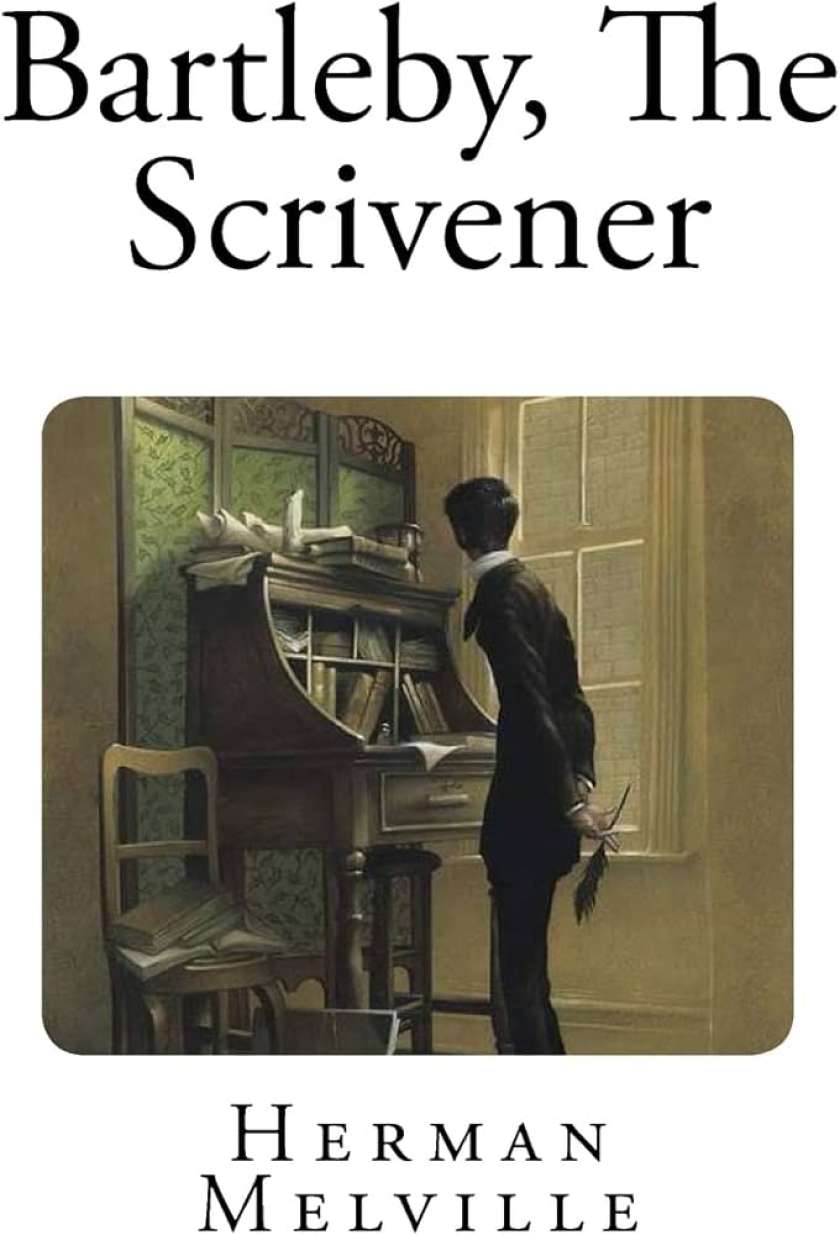
Tucked among the epics on Stephen Colbert’s reading list, Bartleby, the Scrivener is a short, quietly bizarre 19th-century story that feels eerily modern. Set in a Wall Street law office, it’s narrated by a mild-mannered lawyer who hires a new copyist, Bartleby—a pale, polite man who initially works hard, then suddenly begins responding to almost every request with a single line: “I would prefer not to.”
He won’t proofread. He won’t leave the office. He won’t explain himself. As Bartleby slowly stops participating in work, then in life, the narrator oscillates between irritation, pity, guilt, and helplessness. Nothing explodes, no big twist arrives; instead, the story becomes a haunting little study of passive resistance, burnout, bureaucracy, and a man who simply opts out of the demands being placed on him.
Why You Should Read It
If you’re hunting for Stephen Colbert–approved books about work, quiet rebellion, and the absurdity of office life, this is a perfect, slim pick. Melville wrote it in 1853, but it reads like it was designed for the age of corporate malaise and “quiet quitting.” Bartleby doesn’t rant, protest, or explain; he just calmly refuses—forcing everyone around him to confront the inhuman routines they’ve accepted as normal.
It’s a great read if you:
- Love stories where not much happens on the surface, but everything feels off
- Are interested in how literature talks about alienation long before we had the word for it
- Appreciate that special mix of comedy and creeping sadness Colbert often plays with—where a running gag slowly turns into something much more human
At under 100 pages, it’s also the easiest “classic” on this list to actually finish, and it will stick in your head the next time you’re staring blankly at a spreadsheet thinking, I would prefer not to.
Stephen Colbert’s Take
Colbert’s comedy thrives on office satire, legal absurdity, and people quietly refusing to play along with nonsense—and Bartleby sits right in that lane. While he’s more publicly associated with Tolkien and heavyweight contemporary novels, having this on Stephen Colbert’s bookshelf makes perfect sense: it’s dry, funny, and morally uncomfortable all at once. Bartleby’s tiny act of defiance becomes a mirror for everyone else’s compromises.
In the context of “These 10 Books Explain Stephen Colbert Better Than Any Interview Ever Could,” Bartleby, the Scrivener is the one that underlines his instinct to question default settings—at work, in politics, in culture. It’s a reminder that sometimes the sharpest critique isn’t a speech or a rant; it’s a simple, stubborn, “I would prefer not to,” delivered with a straight face.
Read Book: Bartleby, the Scrivener!Brave New World by Aldous Huxley
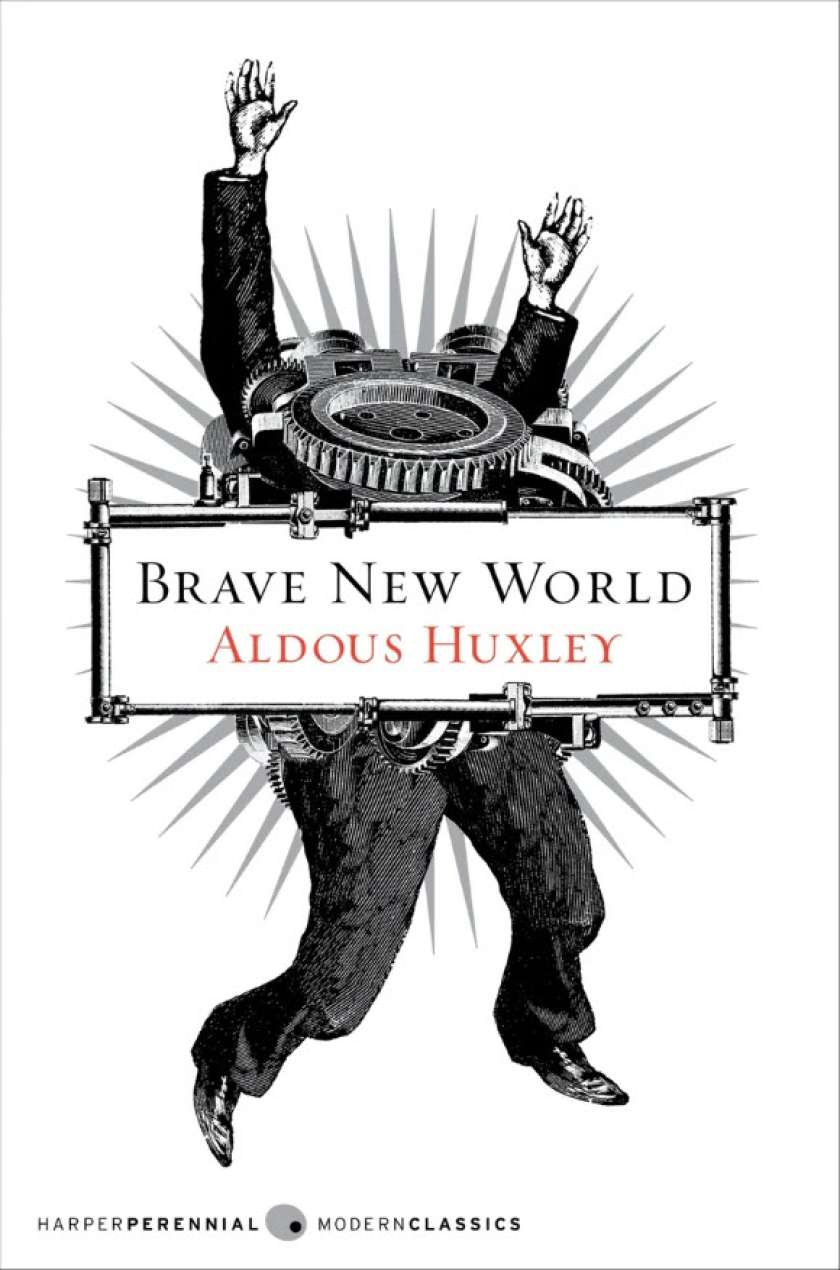
Rounding out the dystopian edge of Stephen Colbert’s reading list, Brave New World imagines a future society where control isn’t maintained by fear and violence, but by pleasure, distraction, and engineered “happiness.”
In Huxley’s World State, humans are grown in hatcheries, sorted into castes, conditioned from birth to love their predetermined roles, and soothed with nonstop entertainment, casual sex, and a drug called soma that erases unpleasant feelings. There’s no family, no real art, no religion in any deep sense—just stability, consumption, and the total avoidance of discomfort. When a man raised outside this system, “the Savage,” is brought into the City, his horror at a world that has traded meaning for comfort forces everyone (including the reader) to rethink what “progress” actually means.
Why You Should Read It
If you want Stephen Colbert–style books about technology, control, and the politics of distraction, Brave New World is essential. Where 1984 (another Colbert favourite) is about surveillance and terror, Huxley’s nightmare is all about soft power: numbing people with convenience, noise, and dopamine hits until they no longer want freedom, depth, or truth. That idea feels uncomfortably current in an age of infinite streaming, algorithmic feeds, and “don’t think too hard” culture.
It’s a crucial read if you:
- Worry that we’re entertaining ourselves into apathy rather than being oppressed into silence
- Like dystopias that feel less like sci-fi and more like a funhouse mirror of right now
- Are interested in how advertising, pleasure, and social conditioning can become tools of control
Alongside Cat’s Cradle, The Sparrow, and Infinite Jest, this novel sits on Colbert’s mental shelf of “funny until you realize it’s about you” books—stories that make you laugh or nod along before quietly asking, “Okay, but what are you trading away for comfort?”
Stephen Colbert’s Take
Colbert has often joked about living in a world that’s “one bad push notification away from disaster,” and his show regularly skewers how media, tech, and politics work together to distract rather than inform. Brave New World is basically the literary blueprint for that critique: a society where no one needs a Big Brother because everyone is too blissfully entertained to cause trouble.
On Stephen Colbert’s bookshelf, this is the dystopia that explains his obsession with calling out shallow “feel-good” answers to serious problems. It’s not just a classic he’s supposed to have read; it’s a warning label for a culture that would rather scroll, shop, and self-medicate than sit with anything difficult—which is exactly the tendency his best comedy tries to interrupt, if only for a few minutes every night.
Get Book: Brave New World!Conclusion
Stephen Colbert’s 10-book stack reads exactly like the man himself: part theologian, part nerd, part smart-aleck, part soft-hearted grief survivor. On one side of his reading list you’ve got the heavy hitters about power and politics—Prequel, Brave New World, Cat’s Cradle, To Kill a Mockingbird—books obsessed with justice, fascism, distraction, and the ways systems either crush or protect ordinary people. On the other, you’ve got deeply personal and spiritual reads—The Modern Loss Handbook, The Screwtape Letters, The Sparrow—that wrestle with suffering, faith, and what it means to keep choosing love when life has already taken so much. Then, just to make things perfectly Colbert, he throws in the unapologetically nerdy and formally wild: The Silmarillion, Infinite Jest, Bartleby, the Scrivener—stories that reward close attention, obscure references, and an affection for beautiful, stubborn weirdness.
If you’re looking for lessons from Stephen Colbert’s reading list, here’s the through-line: pay attention to power, don’t underestimate the quiet forms of resistance, take grief seriously, take faith seriously, and never trust a culture that tells you to numb out instead of wake up. These Stephen Colbert books about grief, politics, faith, and satire don’t just explain what he jokes about; they explain why he keeps showing up night after night, using laughter to point at things that hurt and still insisting there’s meaning to be made. If you want to think a little more like Colbert, you don’t need another interview—you just need to start somewhere on this shelf and let these stories work on you.
