
Here’s the thing about people who say they hate reading: almost none of them actually hate reading.
What they hate is being bored. What they hate is slogging through something dense and slow that was assigned in school and felt like homework dressed up as literature. What they hate is picking up a book everyone swore was brilliant and spending three weeks trying to get past the first fifty pages before quietly setting it down and feeling vaguely guilty about it.
That’s not hating reading. That’s having had the wrong books.
Because the right book doesn’t feel like reading. It feels like falling. You look up and an hour has gone by and you don’t remember deciding to stay. You tell yourself just one more chapter and mean it less and less each time. That experience is available to anyone — including the person who hasn’t enjoyed a book since they were a child, or possibly ever.
These seven books are for that person. Every one of them has converted self-declared non-readers. Every one of them gets out of its own way and just tells you a story you cannot put down.
For the Person Who Loved Thrillers on Netflix
Gone Girl — Gillian Flynn
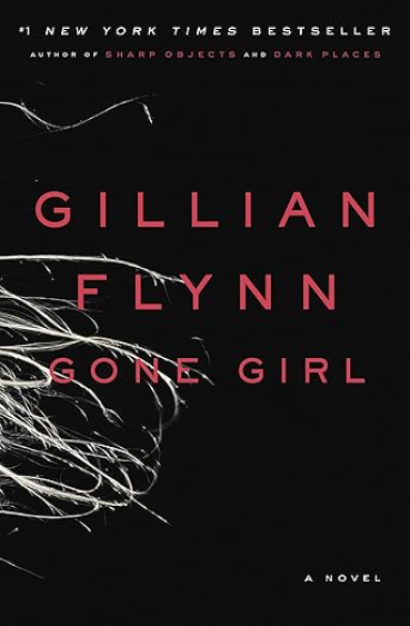
If you can watch a TV thriller without blinking for four hours, you can read this book.
Amy Dunne goes missing on her fifth wedding anniversary. Her husband Nick is the obvious suspect. The story unfolds in two voices — Nick’s in the present, fighting to prove his innocence, and Amy’s through diary entries from the past — and about halfway through, Gillian Flynn does something that will make you want to immediately go back and reread everything you thought you understood.
This is the book that turned a generation of non-readers into readers, and it earned that reputation honestly. Flynn writes with total confidence and absolutely zero patience for filler. Chapters end in places that make it physically difficult to stop. People who claim to have finished it in a single sitting are not exaggerating — they are simply telling the truth about what this book does to your sense of time.
If you’ve been burned by slow-starting literary fiction before, start here. This one doesn’t make you wait.
Get Book: Gone Girl!For the Person Who Prefers Watching to Reading
The Seven Husbands of Evelyn Hugo — Taylor Jenkins Reid
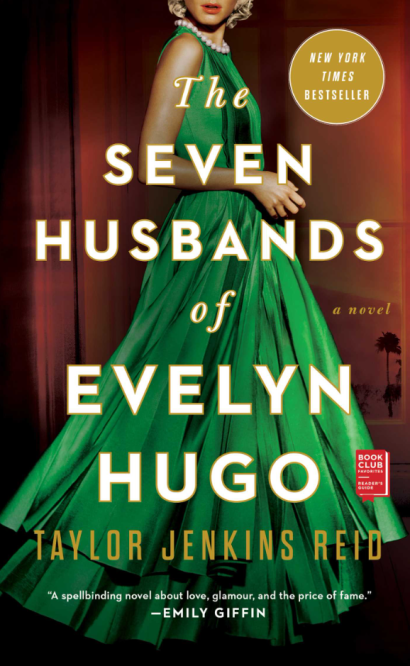
Some books feel cinematic. This one feels like the greatest film you never saw.
Evelyn Hugo is a fictional Old Hollywood legend — glamorous, ruthless, magnetic, and in her eighties when she finally decides to tell the truth about her life. She chooses an unknown journalist named Monique as the person to tell it to, and neither of them fully understands why at first. What follows is the story of Evelyn’s seven marriages, told with all the drama, heartbreak, secrets, and moral complexity that the best prestige television reaches for and sometimes achieves.
Taylor Jenkins Reid writes with such forward momentum that the length never registers. By the time you realise you’ve read three hundred pages, you’re too invested to consider stopping. This is a book that people press into the hands of friends who don’t read with the urgent instruction to just try the first chapter. Nobody stops after one chapter.
It is compulsively readable, emotionally huge, and ends in a way that will stay with you for days.
Get Book: The Seven Husbands of Evelyn Hugo!For the Person Who Says Books Are Too Long and Slow
The Alchemist — Paulo Coelho
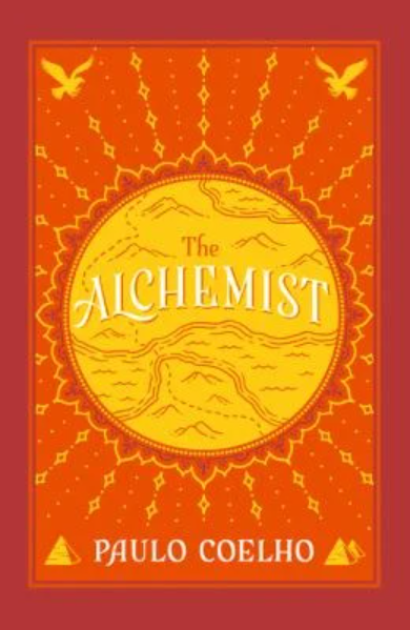
Short sentences. Big ideas. A story that reads more like a fable than a novel.
Santiago is a shepherd boy in Spain who dreams of treasure buried near the Egyptian pyramids. He sells his flock and sets out to find it. What he encounters along the way — the people, the setbacks, the moments of clarity — becomes a meditation on following what your life is actually trying to lead you toward.
This book is the answer to every complaint that reading takes too long. It is under two hundred pages. The language is simple and unhurried. The chapters are short. And yet it carries more weight than books three times its length, because Coelho is writing about something true at the core — the cost of ignoring the life you were meant to live, and the strange way the world seems to help when you finally start walking toward it.
People come back to this book repeatedly across different phases of their lives, and it says something different each time. For a first-time adult reader, it is one of the most quietly powerful places to begin.
Get Book: The Alchemist!For the Person Who Only Reads Things That Actually Happened
Educated — Tara Westover
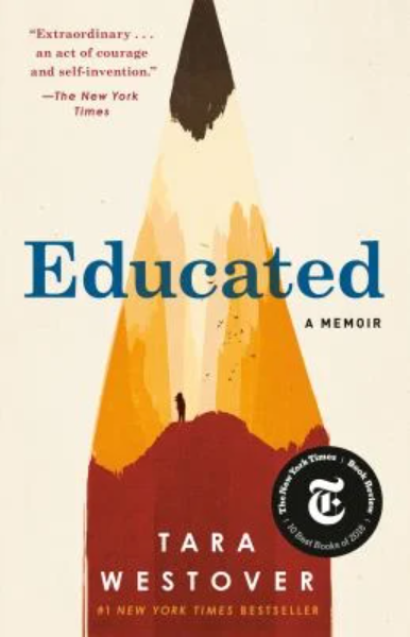
This memoir reads with the pace and tension of a thriller, except that everything in it is real.
Tara Westover grew up in rural Idaho in a survivalist family that didn’t believe in school, doctors, or much contact with the outside world. She had no birth certificate until she was nine. She had never been inside a classroom by the time she was a teenager. She taught herself enough to pass the ACT and was admitted to Brigham Young University, then went on to earn a PhD from Cambridge — all while trying to reconcile what her family insisted was true with what she was learning the world actually was.
The book is about education in the largest sense: not just the formal kind but the harder work of understanding your own story, deciding which parts of it belong to you, and finding out who you are when you separate yourself from what you were told to be. For people who say they can only engage with things that really happened, this is exactly the right book — because nothing a novelist could invent touches what Westover actually lived.
Get Book: Educated!For the Person Who Wants to Laugh While They Read
A Man Called Ove — Fredrik Backman
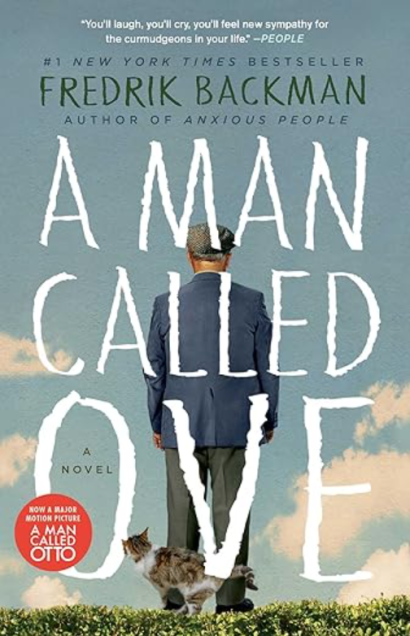
The plot summary sounds like it should be sad. The book is one of the funniest things you will read this year.
Ove is a recently widowed Swedish man in his late fifties, deeply grumpy, rigidly principled, and quietly furious at a world that has stopped making sense to him. He has decided, with great practicality, that there is no reason to continue. His new neighbours keep interrupting him. What follows is the story of how a man who has closed himself entirely off from the world is gradually, stubbornly pulled back into it — through a pregnant woman who asks too many favours, a stray cat he doesn’t want, and a boy who needs someone to teach him things.
Backman writes with warmth that never tips into sentimentality, and with a comic timing that makes you laugh out loud and then feel slightly caught off guard by how much you care. Ove is the kind of character you spend the whole book being exasperated by and the last pages being quietly devastated to leave. For someone who avoids reading because they find it joyless, this is the antidote.
Get Book: A Man Called Ove!For the Person Who Thinks Books Can’t Compete with the Internet
The Curious Incident of the Dog in the Night-Time — Mark Haddon
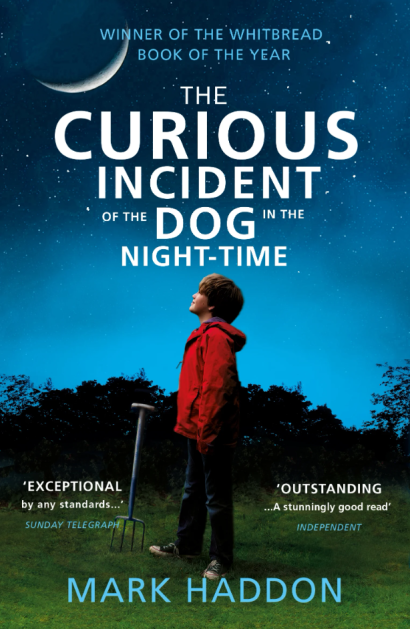
Christopher Boone is fifteen years old and knows every prime number up to 7,507. He has never been further from home alone than the end of his road. One night he finds his neighbour’s dog stabbed with a garden fork and decides to investigate. This is his account of what he found.
The book is narrated entirely in Christopher’s voice — precise, literal, digression-averse, and oddly compelling in ways that take a few pages to understand and then become impossible to abandon. Haddon writes in short chapters that end before you expect them to. He includes diagrams and maps and mathematical proofs, which sounds strange and reads as completely natural. The mystery is real. The emotional stakes are higher than they first appear.
For people who find their attention fractured — who scroll rather than settle, who can’t imagine giving a single thing their focus for hours — this book is unusually good at holding you. It moves the way a good podcast moves, in a voice so specific and unusual that you want to stay inside it just a little longer than you intended.
Get Book: The Curious Incident of the Dog in the Night-Time!For the Person Who Has Never Found a Book That Felt Like It Was For Them
The Midnight Library — Matt Haig
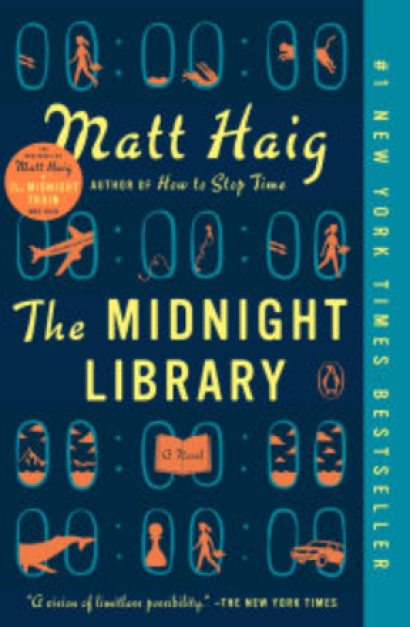
Somewhere between life and death there is a library. It contains every book describing every life you could have lived if you had made different choices. Nora Seed, who has arrived there after deciding she no longer wants her own life, is given the chance to try them.
Matt Haig wrote this book for people who feel stuck, or lost, or quietly certain that everyone else’s life is better than theirs. It is about regret, about the stories we tell ourselves about the paths we didn’t take, and about what it actually means to be alive in your own life rather than a spectator of the ones you didn’t choose. It is also an incredibly fast read — the kind of book you expect to take a week and finish in two days, slightly surprised at how much it moved you.
Haig writes simply and without pretension. There is no showing off in this book, no language that needs decoding, no patience required on the reader’s part. Just a story that meets you exactly where you are and asks whether the life you have might be worth something after all.
Get Book: The Midnight Library!The right book doesn’t ask you to become a different person to enjoy it. It just asks you to start the first page.
All seven of these books have one thing in common: they were read by people who swore they didn’t read, and finished by people who immediately wanted to know what to pick up next. That’s the thing about finding the right book. It doesn’t just give you one good read. It opens the door to all the others.
