
Keanu Reeves has built a reputation as one of Hollywood’s nicest guys. He’s famously humble, quietly thoughtful, and seemingly untouched by the usual excesses of celebrity culture. But take a look at his bookshelf, and you’ll discover a reading taste that’s considerably darker, stranger, and more intellectually adventurous than you might expect.
We’re talking unsettling science fiction, existential philosophy, psychological discomfort, and novels that ask difficult questions about love, identity, power, and what it means to be human. These aren’t necessarily the books you pick up for a little light reading before bed. Some are disturbing. Others are notoriously demanding. And a few might leave you questioning reality itself.
But what’s particularly interesting isn’t simply how dark his literary tastes can get. It’s how deeply he seems to engage with what he reads. Reeves talks about books with genuine wonder, sometimes describing experiences that have changed how he sees the world. He’s drawn not just to the darkness in these stories, but to the humanity underneath it.
So while John Wick might be comfortable navigating a dangerous world, Keanu Reeves appears equally willing to explore the more unsettling corners of the human mind. And his favorite books reveal a curious, sensitive, and surprisingly adventurous reader who isn’t afraid to be challenged.
The Elementary Particles by Michel Houellebecq
The Elementary Particles follows two half-brothers whose lives couldn’t be more different. Michel is an emotionally detached molecular biologist who retreats into science, while Bruno is a frustrated, sexually obsessed teacher desperately searching for satisfaction.
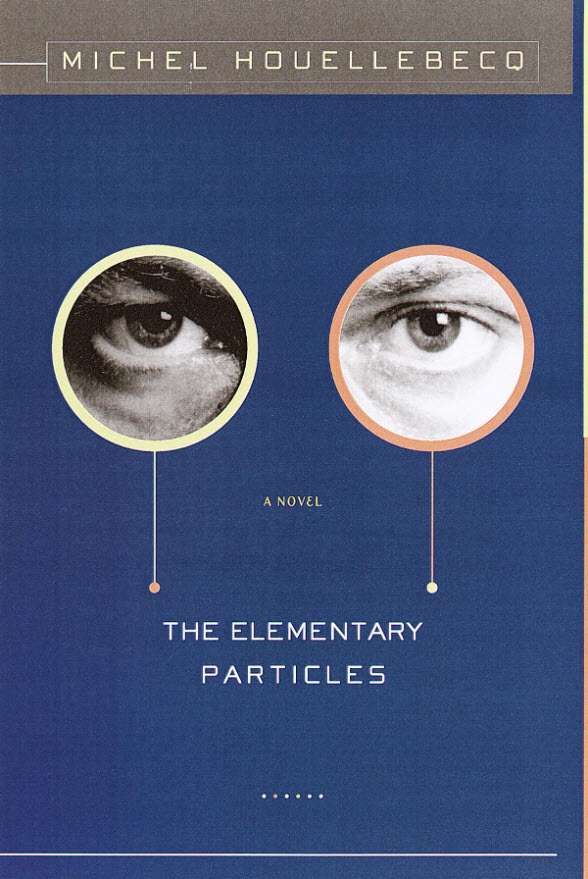
Through their contrasting lives, Michel Houellebecq explores modern society’s relationship with sex, love, loneliness, and the consequences of a culture increasingly driven by individual desire.
It’s a provocative, often deeply uncomfortable novel that questions whether modern freedom has actually made people happier—or simply left them more isolated.
Why You Should Read It
If you appreciate fiction that challenges your worldview rather than reassuring you, The Elementary Particles is worth exploring. Houellebecq doesn’t soften his characters’ flaws or shy away from disturbing subjects. His portrayal of modern relationships can be cynical, shocking, and occasionally difficult to stomach.
But underneath the novel’s bleak observations lies a surprisingly human question: What happens when people desperately need love but struggle to form meaningful connections?
It’s not an easy read, and its controversial treatment of sex and human relationships won’t appeal to everyone. Yet its willingness to confront uncomfortable truths makes it a memorable piece of contemporary literary fiction.
Keanu Reeves’ Take
“Wow…. I don’t want to influence a read with a comment.. But… we are frail sometimes… and we all want and need love… I had never experienced a novel like this… it was often shocking to me in such a great way… and ultimately very moving and surprising… wonderfully written in my estimation.”
What’s fascinating about Reeves’ reaction is that he doesn’t dwell on the novel’s controversy or its more disturbing moments. Instead, he comes away thinking about human vulnerability and our universal need for love.
For a book often described as cold, cynical, and deeply pessimistic, that’s a remarkably compassionate response. And perhaps it tells us something about the kind of reader Keanu Reeves is: someone willing to look beyond a story’s darkness to find the humanity at its centre.
Get Book: The Elementary Particles!The Three Stigmata of Palmer Eldritch by Philip K. Dick
In a future where Earth has become unbearably hot and humanity has begun colonizing other planets, life isn’t exactly looking promising. To escape their miserable circumstances, colonists turn to a drug called Can-D, which allows them to temporarily inhabit artificial fantasy worlds.
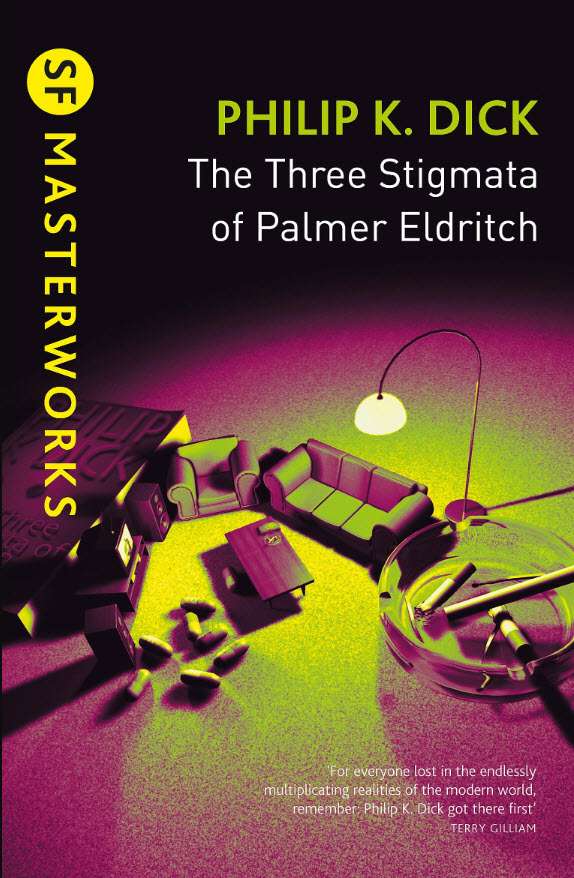
But when the mysterious businessman Palmer Eldritch returns from a journey beyond the solar system with a powerful new drug, Chew-Z, the boundaries between reality, hallucination, and something far more sinister begin to collapse.
Philip K. Dick takes what initially sounds like a bizarre science-fiction adventure and transforms it into a deeply unsettling exploration of consciousness, identity, religion, and the terrifying possibility that reality itself cannot be trusted.
Why You Should Read It
If you enjoy science fiction that makes you question everything you think you understand, this novel belongs on your reading list.
Dick isn’t particularly interested in giving readers a comfortable, straightforward adventure. Instead, he builds a world where perception is unreliable, powerful corporations exploit human desperation, and even the characters struggle to determine what’s real.
It’s strange, darkly funny, philosophical, and occasionally disorienting. But that’s part of its brilliance. Beneath the hallucinatory science-fiction premise are fascinating questions about free will, faith, and how easily our understanding of reality can be manipulated.
And if you’ve ever watched The Matrix and found yourself fascinated by the idea that the world around you might not be what it seems, this is exactly the kind of literary rabbit hole worth exploring.
Keanu Reeves’ Take
“made me laugh out loud …and then some… this novel was revelatory for me… a kind of glee at experiencing the worlds and perspectives the author unfolded before my very eyes… I have not ‘seen’ the same since..”
Considering Reeves played Neo in The Matrix, there’s something wonderfully fitting about his fascination with a novel that dismantles the very idea of reality.
But what stands out most is his sheer excitement. He describes laughing out loud, experiencing genuine delight, and ultimately seeing the world differently after reading it.
That’s quite an endorsement. For Reeves, The Three Stigmata of Palmer Eldritch wasn’t simply an entertaining science-fiction novel. It was the kind of reading experience that permanently shifted his perspective—and those are often the books that stay with us longest.
Get Book: The Three Stigmata of Palmer Eldritch!Three Moments of an Explosion: Stories by China Miéville
What happens when the familiar world suddenly becomes unrecognizable? In Three Moments of an Explosion, China Miéville delivers a collection of short stories in which ordinary reality gives way to the bizarre, the terrifying, and the wonderfully inexplicable.
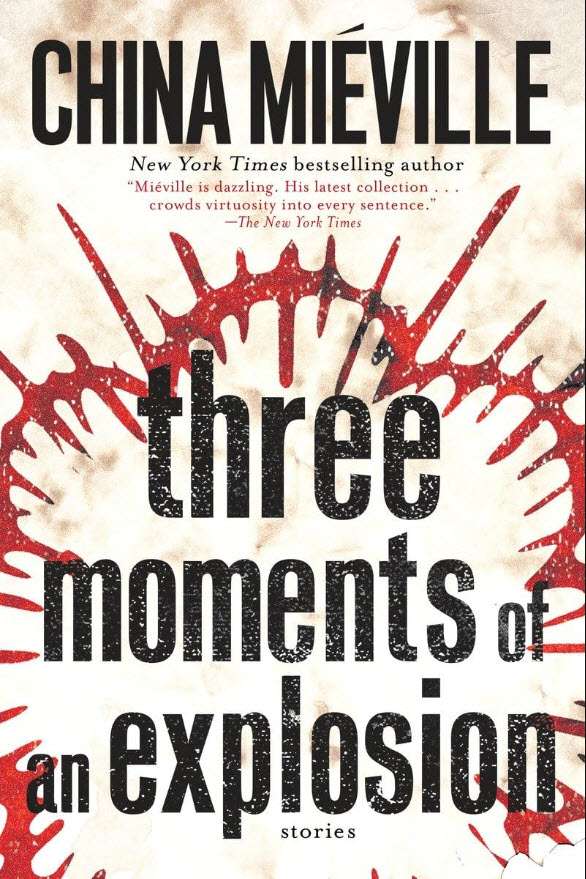
Across the collection, you’ll encounter strange phenomena, unsettling transformations, mysterious disappearances, and worlds that operate according to rules nobody quite understands. From an oil rig that mysteriously appears in the sky to a deadly new form of medical diagnosis, Miéville takes seemingly impossible ideas and explores them with extraordinary imagination.
These aren’t conventional horror or science-fiction stories. They’re something much harder to categorize, blending speculative fiction, surrealism, dark humor, and an unmistakable fascination with the unknown.
Why You Should Read It
If you love stories that surprise you, unsettle you, and leave you thinking long after you’ve finished reading, this collection is an excellent choice.
Miéville has a remarkable ability to make the impossible feel strangely believable. He doesn’t always explain the mysteries he introduces, and his stories don’t necessarily offer the tidy resolutions readers might expect. Instead, he invites you to experience worlds where the boundaries between humanity, nature, technology, and the supernatural are constantly shifting.
Some stories are disturbing. Others are unexpectedly funny. Many are simply unlike anything you’ve encountered before.
It’s particularly rewarding for readers who enjoy imaginative fiction that refuses to follow familiar formulas.
Keanu Reeves’ Take
“kept me up way too late …so inventive, creative, extraordinary humanity and other… remarkable…”
There’s something wonderfully relatable about Reeves admitting that a book kept him awake far longer than intended.
But his description of the collection’s “extraordinary humanity and other” is especially revealing. He’s clearly captivated by Miéville’s imagination, yet he also recognizes the human element running through these strange and often unsettling stories.
For someone whose film career has frequently explored extraordinary worlds, it’s interesting to see Reeves respond with such genuine wonder to a writer who pushes the limits of what fiction can imagine.
And if a collection can keep Keanu Reeves turning pages well past bedtime, that’s a pretty compelling reason to give it a try.
Get Book: Three Moments of an Explosion!In Search of Lost Time by Marcel Proust
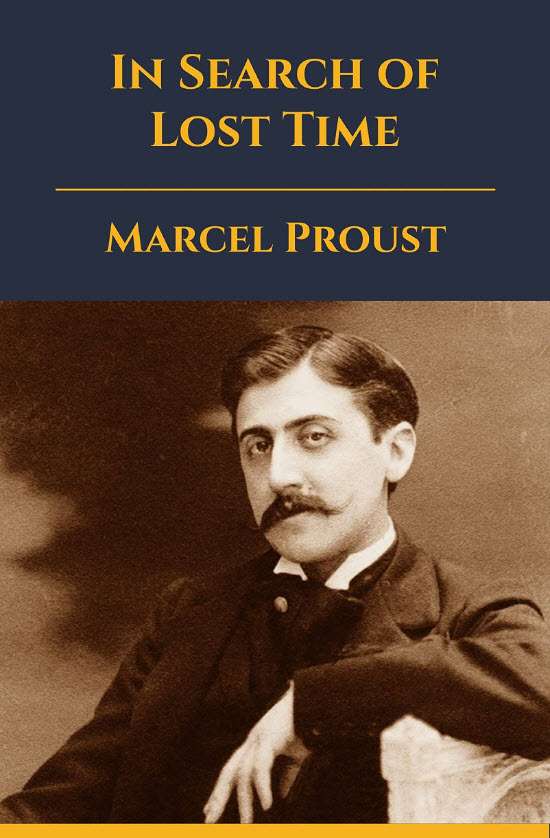
Few novels ask as much of their readers as Marcel Proust’s In Search of Lost Time. Spanning seven volumes, this monumental work follows a narrator’s reflections on childhood, love, jealousy, society, art, and the mysterious ways memory shapes our understanding of life.
Rather than unfolding through a conventional, fast-moving plot, Proust’s masterpiece moves through recollections, conversations, observations, and seemingly ordinary moments that reveal extraordinary emotional depth. A familiar taste can awaken an entire childhood. A passing encounter can become an obsession. And years of experience can suddenly take on new meaning when viewed through the distance of time.
At its heart, this is a novel about how we experience life, how we remember it, and how much of ourselves we discover only by looking back.
Why You Should Read It
In Search of Lost Time is for readers who enjoy getting completely immersed in a writer’s mind.
Proust has an extraordinary ability to articulate feelings and experiences that most of us recognize but struggle to put into words. He explores the smallest details of human behavior with remarkable sensitivity, turning everything from social ambition to romantic jealousy into something worthy of serious reflection.
Of course, its length and famously elaborate sentences can feel intimidating. But this isn’t a book you need to race through. It’s one to live with, returning to its observations over weeks, months, or even years.
And for readers willing to embrace its slower rhythm, the reward is a deeper appreciation of memory, beauty, longing, and the passing of time.
Keanu Reeves’ Take
“enjoyed reading over a couple of years…starting with Lydia Davis’s translation of Vol 1… the novels were my companions over many days and travels… which turned out to be so fitting… and so worthwhile.. elegance in longing…and the beauty of place names… being…”
There’s something particularly lovely about Reeves describing Proust’s novels as his companions.
He didn’t approach this enormous literary undertaking as something to conquer or finish as quickly as possible. Instead, he spent years with it, allowing the books to accompany him through different places and experiences.
And his phrase “elegance in longing” captures something essential about Proust’s writing: the beauty and sadness of wanting, remembering, and experiencing a world that never quite stays the same.
For all the darker and more unsettling books on Reeves’ reading list, this recommendation reveals another side of his literary personality. He’s just as interested in the quiet complexities of memory and emotion as he is in the strange and extraordinary.
Get Book: In Search of Lost Time!Novel with Cocaine by M. Ageyev
Set in Moscow during the turbulent years surrounding the Russian Revolution, Novel with Cocaine follows Vadim Maslennikov, a troubled young student whose adolescence becomes a disturbing journey through selfishness, sexual awakening, emotional cruelty, and drug addiction.
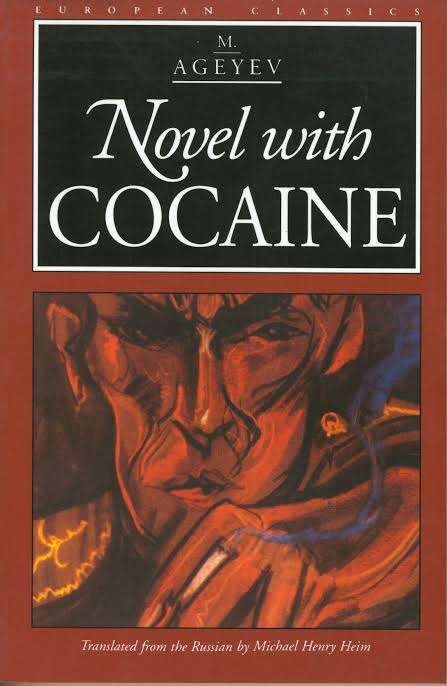
Vadim is hardly a sympathetic protagonist. He mistreats the people who care about him, struggles to form genuine emotional connections, and repeatedly makes choices that push him further toward isolation. As his life unravels, cocaine becomes both an escape from reality and another force accelerating his destruction.
Yet beneath the novel’s bleak portrait of addiction and moral decline lies something more complicated: the story of a young person gradually losing his innocence, his sense of possibility, and perhaps even his capacity for hope.
Why You Should Read It
If you appreciate psychologically intense fiction with deeply flawed narrators, Novel with Cocaine is a fascinating, if uncomfortable, read.
Ageyev places readers inside the mind of a young man who is frequently cruel, contradictory, and painfully self-aware. Rather than offering a straightforward cautionary tale about drugs, the novel explores the emotional and psychological conditions that make self-destruction possible.
It’s also a striking portrait of youth during a period of enormous social upheaval, when personal confusion unfolds against a world undergoing dramatic change.
The result is a short but unsettling novel about alienation, desire, addiction, and the painful distance between who we are and who we might have become.
Keanu Reeves’ Take
“perhaps not break my heart, but somehow a kind of heartache of the loss of innocence… youth… hope?…”
What makes Reeves’ response so interesting is its uncertainty.
He doesn’t describe the novel as simply tragic or heartbreaking. Instead, he struggles to identify a more elusive feeling: a kind of sorrow for everything that disappears as innocence gives way to experience.
His hesitation over the word “hope” feels particularly fitting for a novel in which the protagonist’s choices gradually close off the possibilities that once lay ahead of him.
And once again, Reeves seems less interested in judging a deeply flawed character than in understanding the human loss beneath his behavior. It’s a thoughtful response to a book that offers very little comfort but leaves plenty to reflect on.
Get Book: Novel with Cocaine!Men in the Sun and Other Palestinian Stories by Ghassan Kanafani
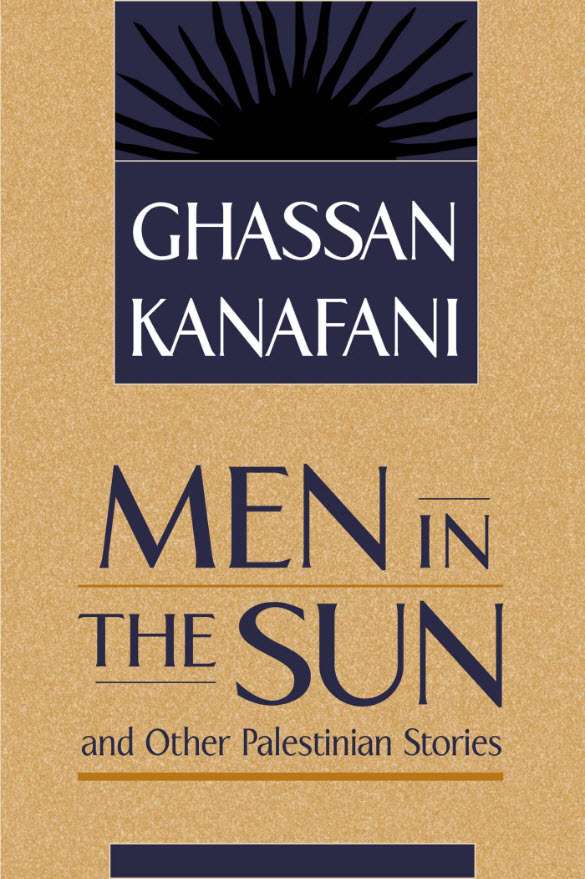
Men in the Sun and Other Palestinian Stories brings together powerful works by Palestinian writer Ghassan Kanafani, whose fiction explores displacement, exile, loss, and the struggle to preserve dignity in the face of political upheaval.
The title novella follows three Palestinian refugees attempting to cross the desert into Kuwait in search of work and a better future. Each man carries his own history of dispossession and disappointment, and each hopes that reaching Kuwait might offer some measure of stability. But their desperate journey takes a devastating turn, leading to one of the most haunting endings in modern Arabic literature.
Through spare, emotionally charged storytelling, Kanafani captures the human consequences of displacement, revealing how political circumstances shape ordinary lives, relationships, and hopes for the future.
Why You Should Read It
If you believe literature can help us understand experiences far removed from our own, this collection is essential reading.
Kanafani doesn’t approach displacement as an abstract political issue. Instead, he gives readers individual lives to care about: people with families, memories, ambitions, and the same desire for security and belonging that connects us all.
His writing is direct yet deeply symbolic, allowing seemingly simple moments to carry enormous emotional and historical weight. The stories are often heartbreaking, but they also invite reflection on identity, responsibility, silence, and survival.
Men in the Sun is particularly powerful because it asks readers to confront not only the suffering of its characters but also the circumstances that make their suffering possible.
It’s a collection that rewards careful reading and stays with you long after the final page.
Keanu Reeves’ Take
“Wrenching and unendingly important, a collection to which I frequently return.”
There’s a quiet seriousness in Reeves’ recommendation that makes it especially powerful.
Unlike some of his other favorites, which he describes with excitement or wonder, this collection earns a more restrained response. He calls it “unendingly important” and, perhaps even more significantly, reveals that he returns to it frequently.
That distinction matters. Some books captivate us once, while others become works we revisit because their meaning and relevance refuse to fade.
For Reeves, Kanafani’s stories clearly belong to the latter category. His recommendation suggests a reader who values literature not only for its imagination or emotional intensity, but also for its ability to bear witness to human suffering and deepen our understanding of the world.
Get Book: Men in the Sun and Other Palestinian Stories!Animal Farm & 1984 by George Orwell
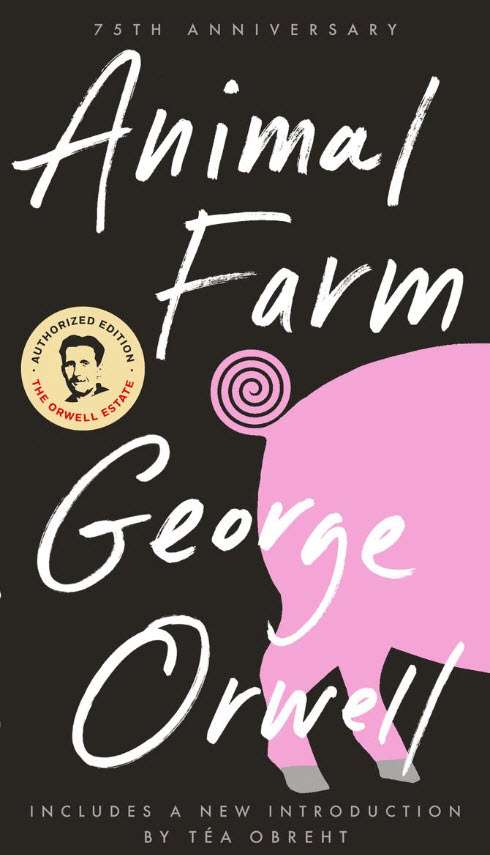
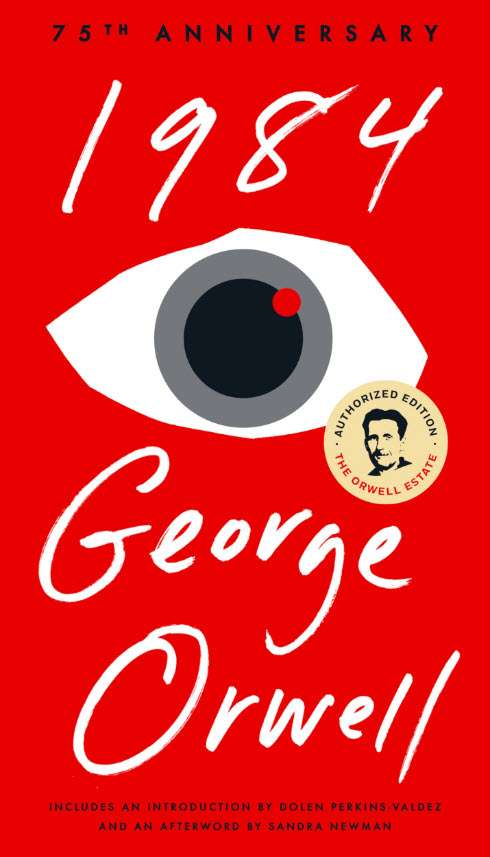
Few writers have explored the dangers of unchecked power as memorably as George Orwell. In Animal Farm and 1984, he presents two very different fictional worlds that expose how political ideals can be corrupted, how language can be manipulated, and how easily freedom can disappear when authority goes unquestioned.
Animal Farm begins with a group of farm animals overthrowing their human owner in the hope of creating a fairer society. But their dream of equality gradually collapses as the pigs assume control, rewriting the rules and exploiting the very animals they promised to liberate.
1984, meanwhile, takes readers into the terrifying world of Oceania, where the Party monitors citizens, controls information, and attempts to dictate not only what people do but what they believe. At the center is Winston Smith, a man whose quiet rebellion against an oppressive government becomes increasingly dangerous.
Together, these novels offer unsettling examinations of propaganda, surveillance, authoritarianism, and the fragile relationship between truth and power.
Why You Should Read Them
If you’ve ever wondered how societies surrender their freedoms or how those in power manipulate public opinion, these two classics are an excellent place to start.
Animal Farm is deceptively simple. Its accessible storytelling and memorable animal characters make it easy to read, but the political ideas beneath the surface are anything but simplistic. Orwell shows how revolutionary promises can be betrayed when power becomes concentrated in the hands of a few.
1984 takes those concerns further, imagining a society where even independent thought is considered dangerous. Its exploration of surveillance, censorship, historical revisionism, and the manipulation of language remains especially thought-provoking.
What makes both books so powerful is their ability to turn complicated political questions into deeply personal stories. They encourage readers to examine authority critically, question the information they’re given, and recognize the importance of independent thought.
Keanu Reeves’ Take
“..as a young person, super grateful for these two profound works to give me a what’s up and watch out peer and context into the world in front of me…”
There’s something revealing about Reeves describing these novels as books that helped him understand the world when he was young.
He doesn’t simply admire Orwell’s storytelling or the frightening societies he imagined. Instead, he credits the novels with giving him perspective and helping him recognize things worth questioning or being cautious about.
His wonderfully casual phrase “what’s up and watch out” captures the practical value he found in them. These weren’t just fictional warnings about imaginary governments; they were books that helped him think more critically about the real world.
And perhaps that’s one of the most interesting things about Keanu Reeves’ reading list. Whether he’s exploring philosophical science fiction, psychological darkness, or political dystopia, he seems drawn to books that change how he understands the world around him.
Get Book: Animal Farm!Closing Reflection
Keanu Reeves might be known as one of Hollywood’s nicest guys, but his bookshelf suggests that being kind and being fascinated by the darker side of humanity are hardly mutually exclusive.
Across these books, there’s a recurring curiosity about what makes us human, what threatens our sense of reality, and how people respond to loneliness, suffering, power, and uncertainty. From the disturbing emotional landscape of The Elementary Particles to the mind-bending worlds of Philip K. Dick and the political warnings of George Orwell, Reeves seems particularly drawn to literature that challenges the way we understand ourselves and the world around us.
But perhaps the most interesting thing about his recommendations is how personally he responds to them. He doesn’t just admire a writer’s intelligence or an author’s imagination. He talks about books breaking his heart, keeping him awake, accompanying him through years of travel, and changing the way he sees the world. And when a story matters enough, as with Ghassan Kanafani’s work, he returns to it again and again.
It’s a reminder that the books we love don’t always reflect the personalities we present to the world. Sometimes they reveal the questions we’re most interested in exploring.
So yes, Keanu Reeves’ favorite books are dark enough to make even John Wick consider taking a break. But look beyond the unsettling plots and philosophical rabbit holes, and you’ll find something surprisingly tender about his reading taste: a genuine fascination with human vulnerability, a willingness to confront uncomfortable truths, and an enduring sense of wonder.
And somehow, that feels very Keanu Reeves.
