
For many readers, H. G. Wells belongs to the future. He is the writer who sent humanity forward through time, brought invaders down from Mars, imagined journeys to the Moon, and made a man disappear. His most famous stories helped shape what science fiction would become, and more than a century later, their ideas remain embedded in popular culture. It is easy, then, to think we already know H. G. Wells.
But science fiction was only one part of his imagination. Wells was equally interested in the world immediately around him: its politics, relationships, class divisions, wars, religious questions, changing attitudes toward women, and competing visions of what society might become. Even when he was writing about impossible technologies or distant civilizations, he was often using them to examine very earthly concerns.
Reading Wells more widely reveals not simply a writer fascinated by the future, but one fascinated by possibility itself. What could science become? How might society be organized differently? What happens when established expectations around love, gender, religion, and class begin to shift? The books below move from the strange worlds for which Wells became famous into the social, political, philosophical, and occasionally playful corners of a body of work much larger than science fiction alone.
The Time Machine
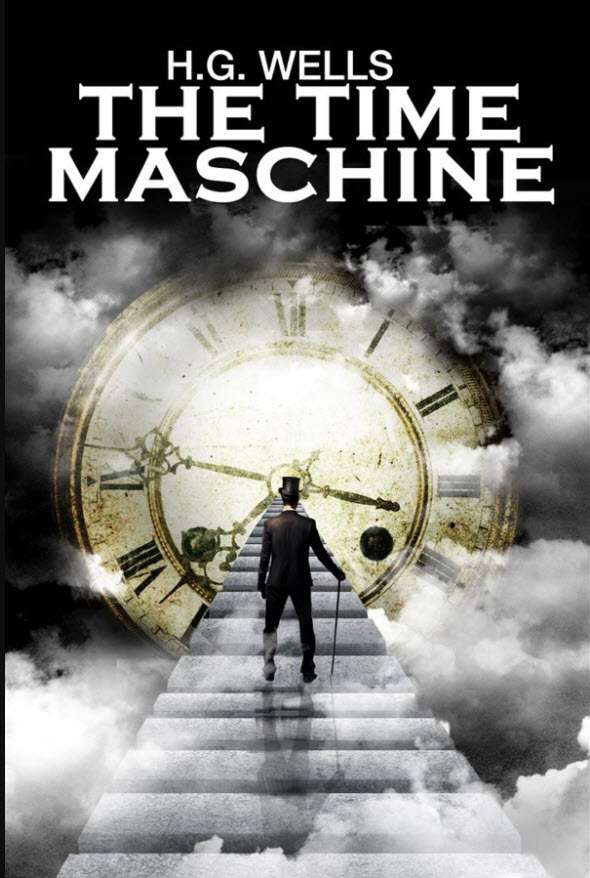
A Victorian inventor known simply as the Time Traveller builds a machine capable of carrying him far into humanity’s future. When he arrives in the year 802,701, he encounters the seemingly gentle Eloi living above ground and the unsettling Morlocks beneath it.
What initially appears to be an extraordinary adventure soon becomes something more troubling, as the future begins to reveal what may have become of the divisions within the society Wells himself knew.
The Time Machine is perhaps the perfect doorway into Wells because it contains so much of what would define his writing. There is scientific imagination and adventure, certainly, but underneath them lies social criticism. Wells does not imagine the future simply to marvel at it; he uses distance to look back at his own world more clearly. It is short, vivid, and remarkably approachable, making it an ideal place to discover why Wells’s speculative fiction has endured.
Reading Commitment: Short — fast-moving and accessible, with ideas that reach far beyond its length.
Read Book: The Time Machine!The War of the Worlds
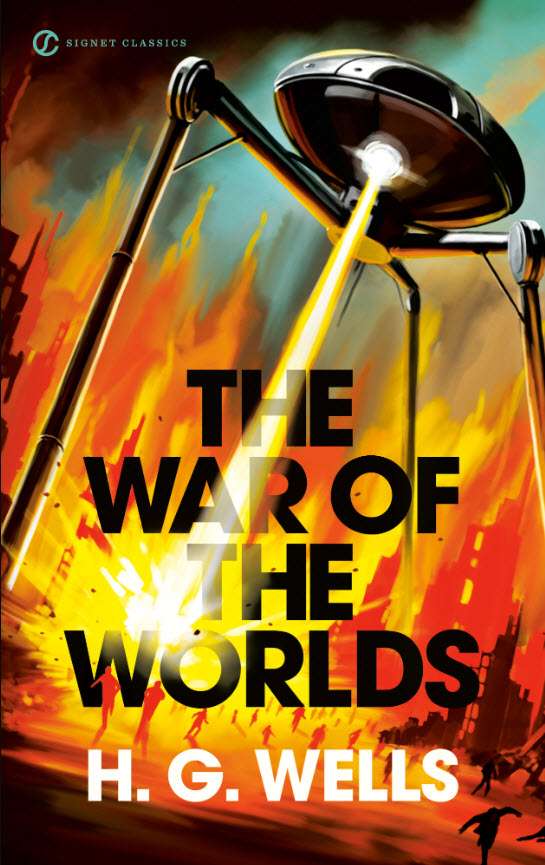
When strange cylinders fall from the sky near London, curiosity quickly gives way to terror as technologically superior Martians emerge and begin destroying everything in their path. Civilization, which had seemed stable and powerful, suddenly becomes extraordinarily fragile.
Wells follows ordinary people through the resulting chaos, allowing the scale of the invasion to be experienced at ground level.
The Martians are frightening, but the deeper unease comes from watching humanity lose its assumed position of superiority. Wells reverses the logic of conquest, placing Britain—the great imperial power of his age—in the position of the invaded. Read this not simply as an alien-invasion story, but as a novel about vulnerability, survival, and how quickly the structures people trust can disappear.
Reading Commitment: Medium — gripping and highly readable, with a surprisingly reflective core.
Read Book: The War of the Worlds!The Invisible Man: A Grotesque Romance
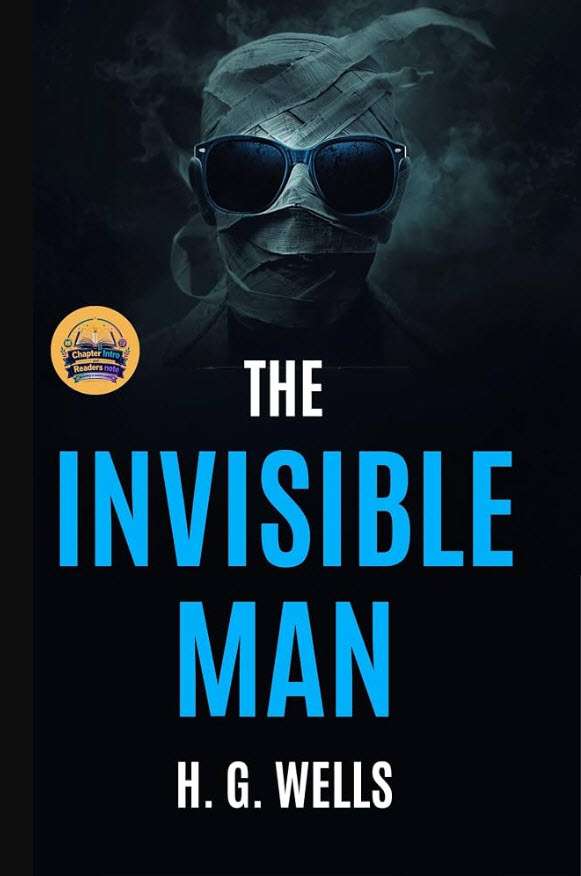
Griffin has achieved something extraordinary: he has discovered how to make himself invisible. Yet Wells is far less interested in celebrating the breakthrough than in asking what happens to the person who possesses it.
Isolated from ordinary society and increasingly consumed by his own power, Griffin turns a scientific triumph into something dangerous.
The novel makes science intensely personal. Invisibility initially sounds like freedom, but Wells gradually transforms it into imprisonment. Griffin cannot participate normally in the world he has changed himself to escape, and his separation from other people feeds paranoia, anger, and violence. It is one of Wells’s most effective explorations of the distance between scientific possibility and human responsibility.
Reading Commitment: Short to Medium — energetic, darkly entertaining, and psychologically sharper than its premise first suggests.
Read Book: The Invisible Man; A Grotesque Romance!The Island of Doctor Moreau
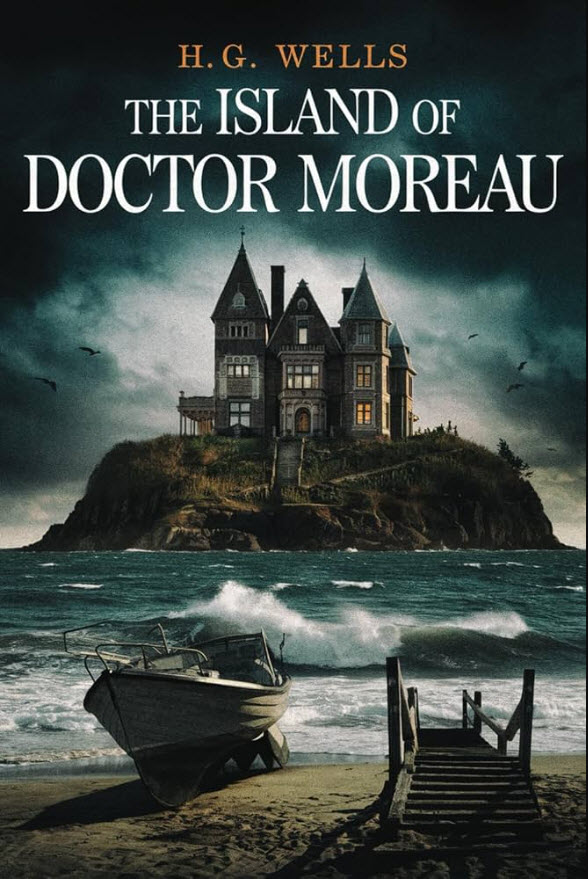
A shipwrecked man finds himself on an isolated island governed by the mysterious Doctor Moreau, a scientist conducting experiments that blur the boundary between human beings and animals.
What he discovers forces him to confront not only the cruelty of Moreau’s work, but uncomfortable questions about what separates civilization from instinct in the first place.
This is Wells at his darkest. Scientific progress is stripped of optimism and examined without the protection of ethical restraint. The island becomes a laboratory not only for Moreau’s experiments, but for Wells’s questions about cruelty, authority, and the confidence with which human beings define themselves as superior to other forms of life. It remains disturbing precisely because those questions have not disappeared.
Reading Commitment: Short to Medium — unsettling and intense, with ideas worth lingering over.
Read Book: The Island of Doctor Moreau!The First Men in the Moon
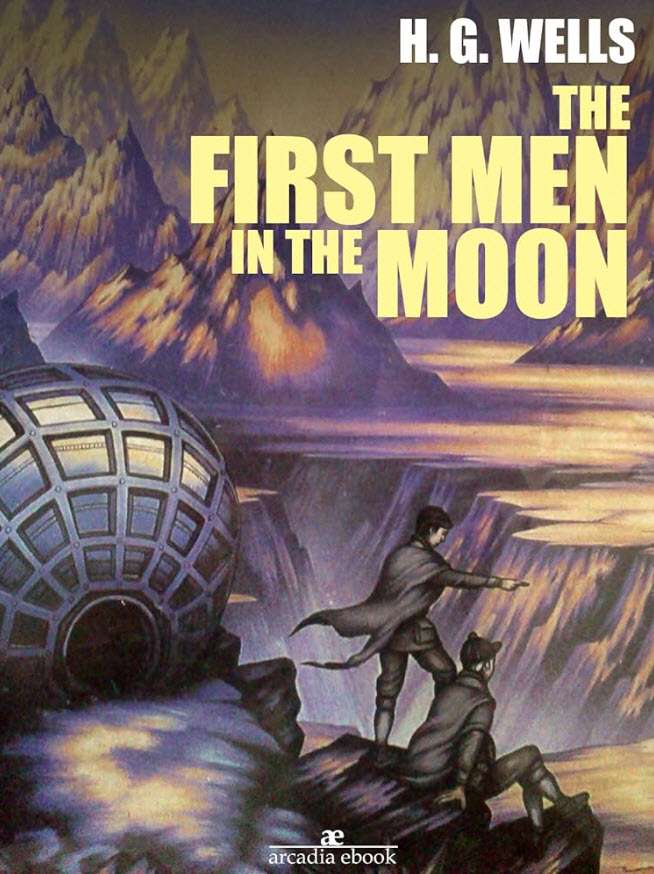
When businessman Mr. Bedford meets the eccentric scientist Cavor, he becomes involved in an invention capable of overcoming gravity. Their experiment eventually carries them to the Moon, where they discover an elaborate civilization living beneath its surface.
There is a wonderful sense of adventure here, but Wells once again refuses to stop at discovery. The lunar society becomes another opportunity to imagine alternative ways of organizing life, labor, intelligence, and community. The result combines scientific wonder with social speculation, showing Wells at his most playful without abandoning the questions that consistently interested him.
Reading Commitment: Medium — imaginative, adventurous, and full of speculative curiosity.
Read Book: The First Men in the Moon!Ann Veronica: A Modern Love Story
And then, almost suddenly, the spaceships and impossible inventions disappear.
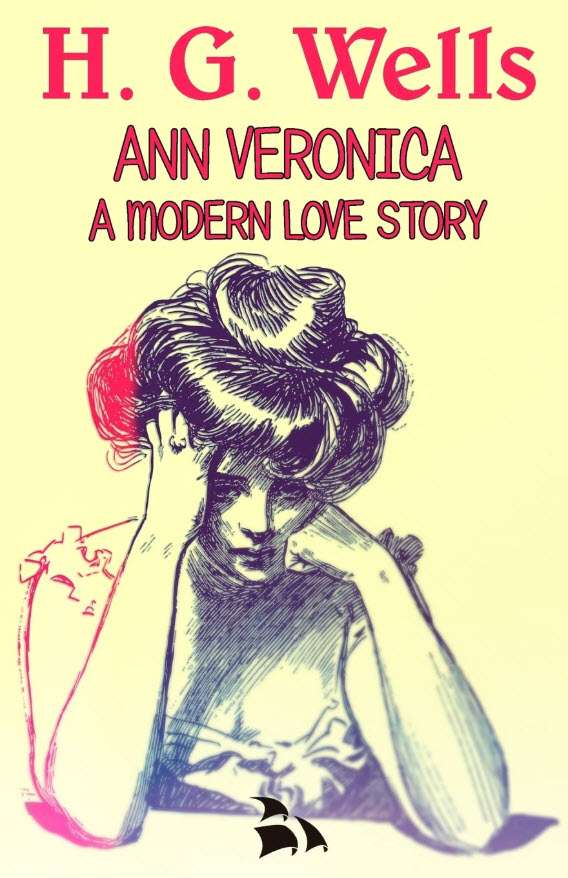
Ann Veronica follows a young woman determined to live independently at a time when independence itself could be treated as rebellion. Frustrated by the restrictions imposed upon her, Ann leaves her father’s home and attempts to build a life in London on her own terms, encountering political activism, financial realities, education, relationships, and the complicated question of what freedom actually requires.
For readers who know Wells only through science fiction, this novel can be revelatory. The future he imagines here is social rather than technological. Wells turns his attention toward women’s autonomy and the expectations surrounding marriage, sexuality, and respectable behavior. Whatever one makes of all its conclusions today, Ann Veronica makes clear how interested Wells was in challenging the structures of his own time.
Reading Commitment: Medium — character-driven, socially observant, and particularly interesting in its historical context.
Read Book: Ann Veronica; A Modern Love Story!Love and Mr. Lewisham
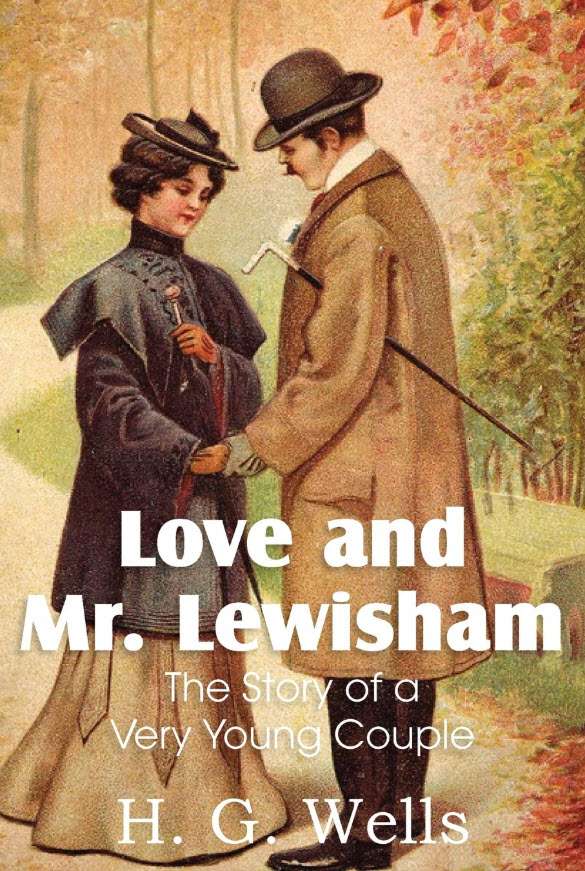
Mr. Lewisham is young, ambitious, and determined to improve his circumstances through education and hard work. Then love complicates the plan. His relationship with Ethel Henderson forces idealism into confrontation with money, responsibility, and the practical demands of adult life.
There are no Martians here, no impossible inventions—only two people discovering that aspirations must somehow coexist with ordinary reality. That smaller scale reveals another strength in Wells’s writing: his attention to class and the everyday pressures that shape people’s choices. It is a warmer, more intimate Wells, interested in what happens when the future someone carefully imagines meets the life they actually have.
Reading Commitment: Medium — approachable and intimate, with a quieter emotional rhythm.
Read Book: Love and Mr. Lewisham!The Passionate Friends
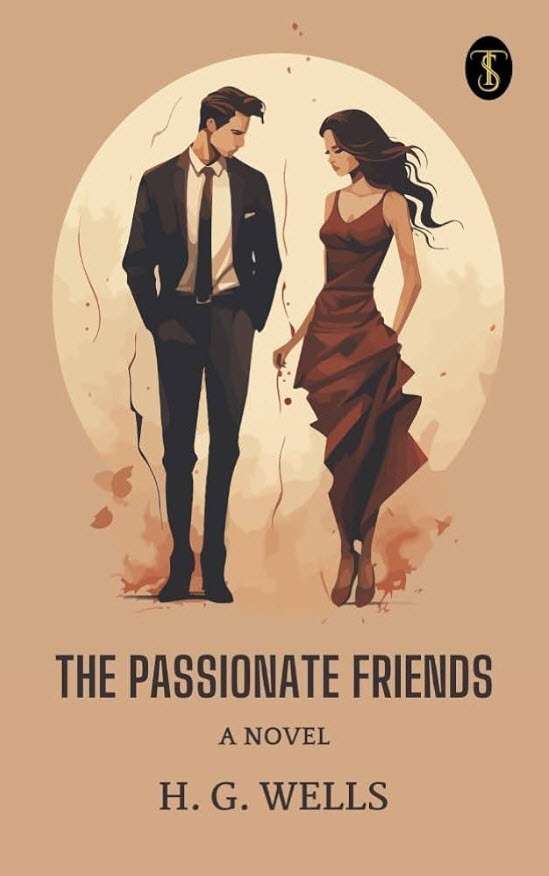
The Passionate Friends turns toward love, marriage, independence, and the difficulty of reconciling desire with the lives people choose to build. At its center is a relationship between Stephen Stratton and Lady Mary Christian, whose connection persists even as circumstance and competing ideas about love pull their lives in different directions.
Wells is particularly interested here in whether love must necessarily mean possession. The novel examines emotional attachment alongside questions of freedom and social convention, making it less a straightforward romance than an argument conducted through relationships. It is a useful reminder that the same writer who imagined alternative civilizations was equally willing to reconsider the structures governing private life.
Reading Commitment: Medium to Long — reflective and emotionally complex, best read for its ideas as much as its romance.
Read Book: The Passionate Friends!A Modern Utopia
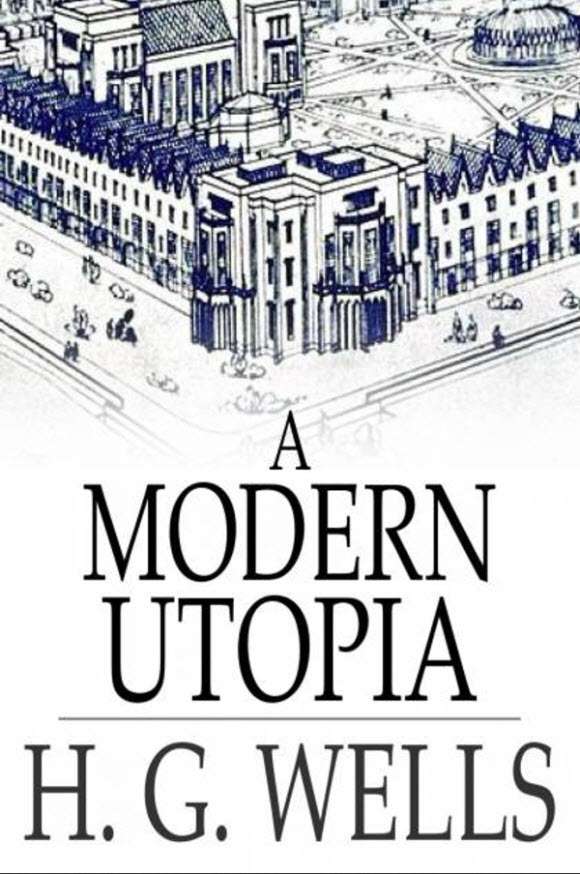
Rather than merely placing characters within a fictional future, A Modern Utopia asks what an ideal global society might actually look like. Wells considers government, economics, education, personal liberty, and social organization, using speculative writing as a space in which existing institutions can be taken apart and rebuilt.
This is the visionary Wells in a different form. There is less conventional storytelling and considerably more argument, but the impulse behind it is familiar: dissatisfaction with accepting the present as inevitable. Readers drawn primarily to Wells’s adventures may find this a significant change of pace, but those interested in the ideas beneath his fiction will find many of his preoccupations brought directly to the surface.
Reading Commitment: Medium to Long — idea-driven and best read slowly rather than as a conventional novel.
Read Book: A Modern Utopia!Mr. Britling Sees It Through
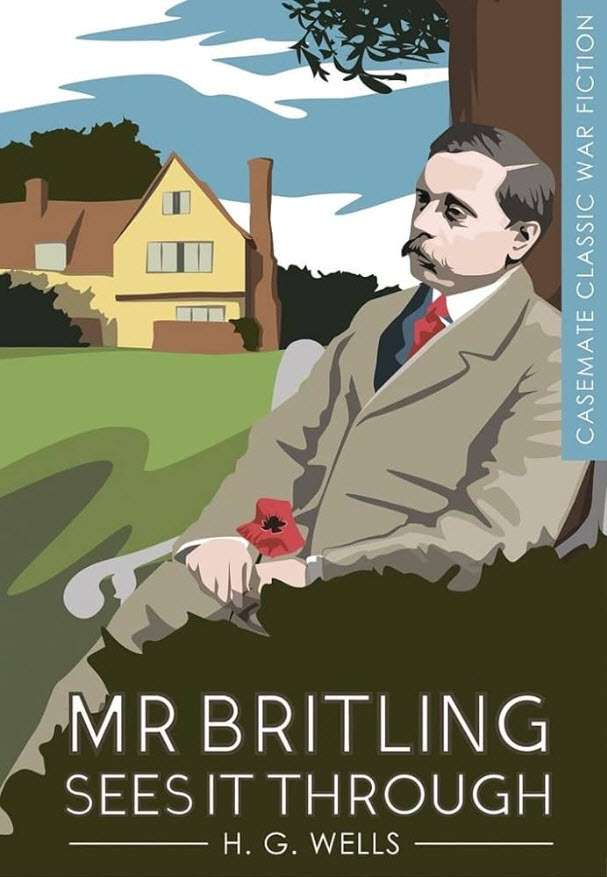
Here Wells turns from imagined catastrophes to one that was painfully real. Written during the First World War, Mr. Britling Sees It Through follows an English writer attempting to understand a conflict that transforms the lives of those around him and challenges assumptions about civilization, patriotism, and progress.
There is something particularly striking about reading this after Wells’s speculative fiction. The writer who imagined Martian invasion and humanity’s distant future is now confronted with destruction created entirely by human beings. The novel captures not simply war itself, but the process of trying to comprehend it—the movement from comfortable distance to personal grief and altered belief.
Reading Commitment: Long — reflective and historically grounded, with considerable emotional weight.
Read Book: Mr. Britling Sees It Through!First and Last Things: A Confession of Faith and a Rule of Life
In First and Last Things, the storyteller steps aside and the thinker comes fully into view. Wells sets out his evolving beliefs about truth, morality, politics, personal conduct, and the nature of existence, offering not a fictional world but an attempt to articulate the principles through which he understood the real one.
It is useful to approach this less as a doctrine to accept than as an opportunity to encounter the intellectual restlessness behind Wells’s fiction. The desire to question inherited assumptions—the same instinct that drives so many of his imagined worlds—is present throughout. Readers who have moved through several of his novels may recognize ideas here that fiction allowed him to explore from a distance.
Reading Commitment: Medium — philosophical rather than narrative, and better taken in sections.
Read Book: First and Last Things!God the Invisible King
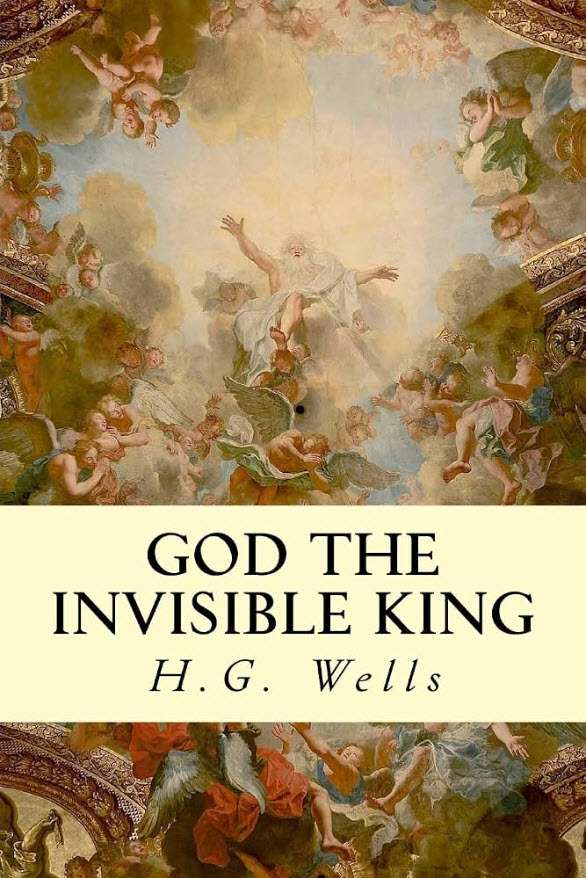
Wells’s intellectual curiosity also extended into religion. In God the Invisible King, he attempts to articulate a personal conception of faith and divinity, moving away from conventional theological formulations toward something he believed could speak to the modern world.
It is a revealing work precisely because it complicates any easy picture of Wells as simply a scientific futurist. His questions about humanity’s direction eventually lead him toward spiritual ones as well. This is unlikely to be the place most readers should begin with Wells, but within a broader journey through his writing, it shows just how far his search for explanations could travel.
Reading Commitment: Medium — reflective and theological, suited to readers interested in Wells’s intellectual development.
Read Book: God the Invisible King!Bealby: A Holiday
After so many enormous questions, Bealby offers something considerably lighter. The novel follows a young servant whose adventures take him through a series of comic mishaps and encounters, allowing Wells to work in a more playful and satirical register.
It may not carry the cultural weight of his major novels, but that is precisely what makes it interesting within this collection. Wells could be funny, mischievous, and willing to let a story move simply for the pleasure of movement. For readers exploring beyond the famous titles, Bealby provides an enjoyable glimpse of that less familiar side.
Reading Commitment: Medium — lighter, comic, and refreshingly different from his more serious work.
Read Book: Bealby!Little Wars
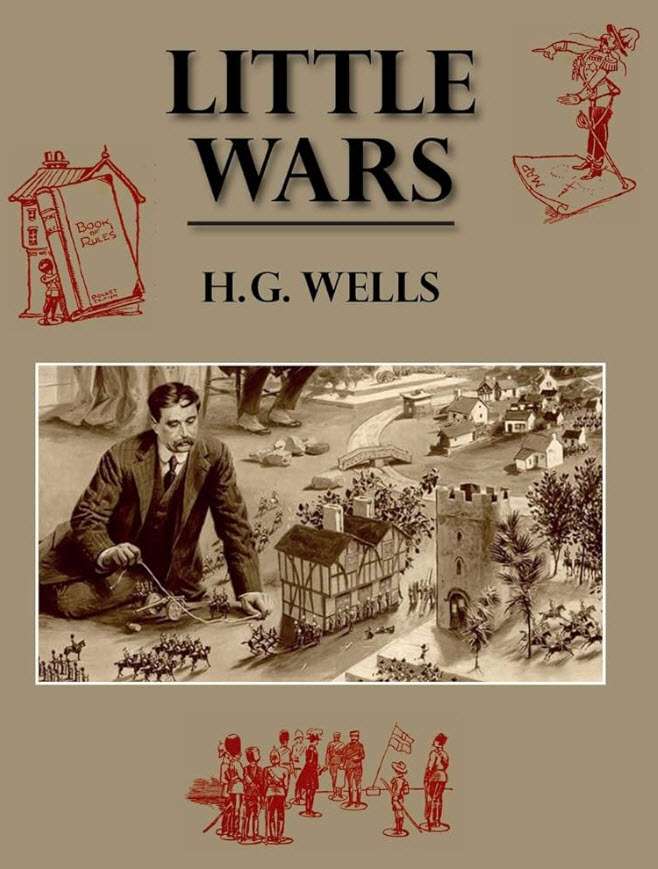
And then there is Little Wars.
Published as a set of rules for playing battles with miniature soldiers, Little Wars is one of those works that makes the breadth of Wells’s curiosity suddenly tangible. He develops systems for movement, combat, terrain, and strategy, turning childhood toy soldiers into an organized tabletop game for adults.
It seems almost absurdly distant from The Time Machine, yet there is something recognizably Wellsian about it. Here again is a writer constructing a world, establishing its rules, and asking what happens once people begin moving within it. Read today, it is both a historical curiosity and a fascinating early landmark in miniature wargaming—and perhaps the most unexpected demonstration of how unwilling Wells was to remain within any single literary category.
Reading Commitment: Short — unusual, playful, and best approached as a fascinating piece of Wells’s extraordinarily varied career.
Read Book: Little Wars!Closing
It is easy to understand why science fiction became H. G. Wells’s defining legacy. The Time Machine, The War of the Worlds, The Invisible Man, and The Island of Doctor Moreau contain ideas powerful enough to outlive the century that produced them. But stopping there leaves much of Wells unexplored.
Across these works, his imagination turns toward science and society, romance and independence, war and politics, faith and philosophy—and occasionally toward miniature soldiers spread across the floor. The subjects change, but the curiosity remains remarkably consistent. Wells was fascinated by the worlds human beings inherit, the ones they construct, and the ones they might still create.
Come for the time machine, the Martians, and the invisible man. Stay long enough, and H. G. Wells becomes something considerably harder to categorize: a writer who seemed determined to imagine almost everything.
